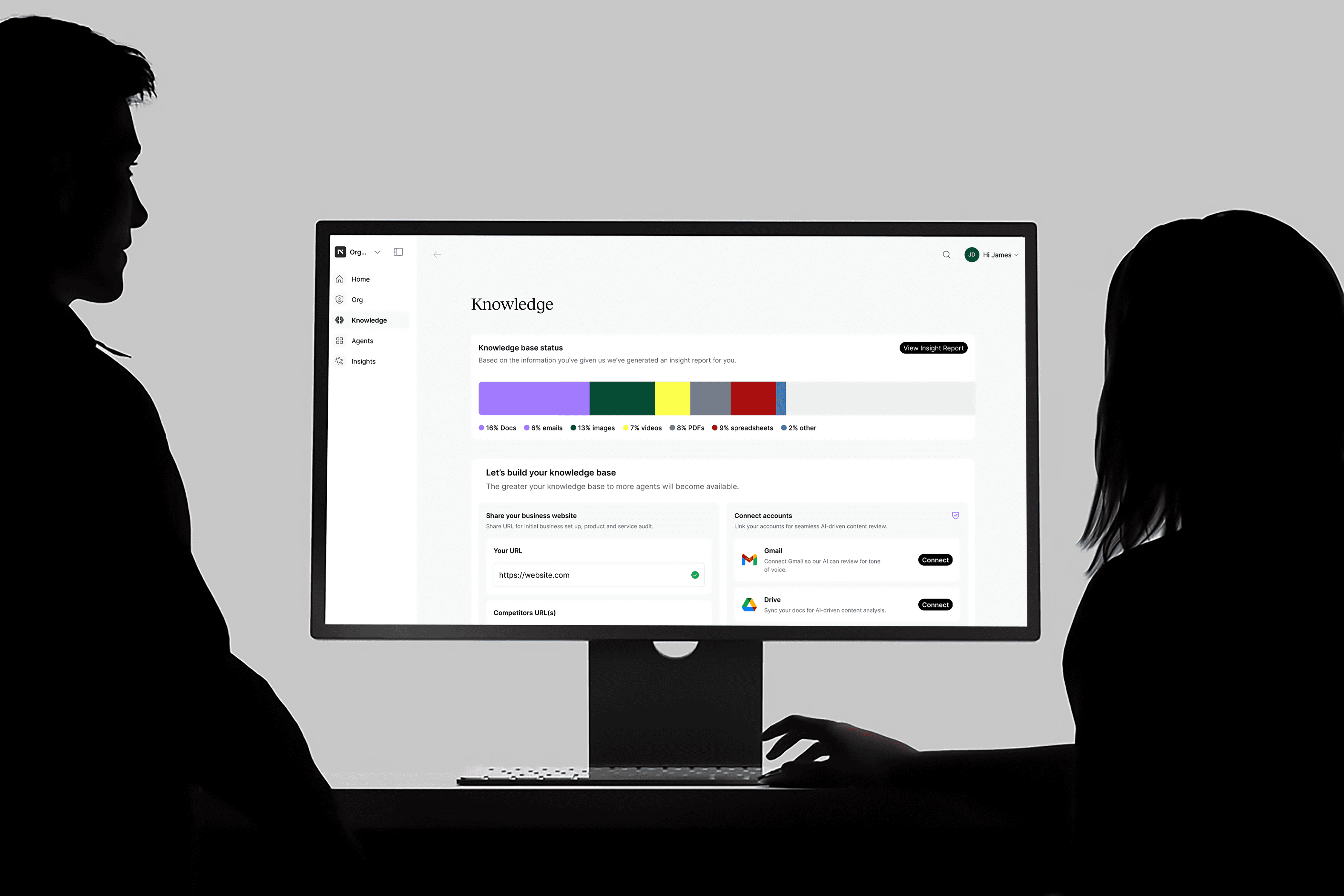
Creating a foundational, pioneering platform to establish the standard for how businesses seamlessly integrate and deploy intelligent AI agents.
Context
Decidr Onboarding Studio is a digital workspace designed to help businesses build and deploy AI agents customized to their needs. The platform simplifies the onboarding process for AI automation, allowing businesses to configure, test, and launch their own agents in minutes.
My role
Lead & Support Designer
Timeline
5 weeks
The challenge
Most small to mid-sized businesses recognize the potential of AI automation but lack the resources or technical capacity to build and manage it effectively.
Breaking it down
Decidr set out to remove those barriers by creating a platform that:
Allows anyone to set up and manage AI agents intuitively
Reduces the time and cost typically associated with AI deployment
Supports multiple use cases, from customer management to recruitment
The goal was to design an experience that would make the process of creating an AI agent feel as simple and approachable as onboarding a new team member.
The solution
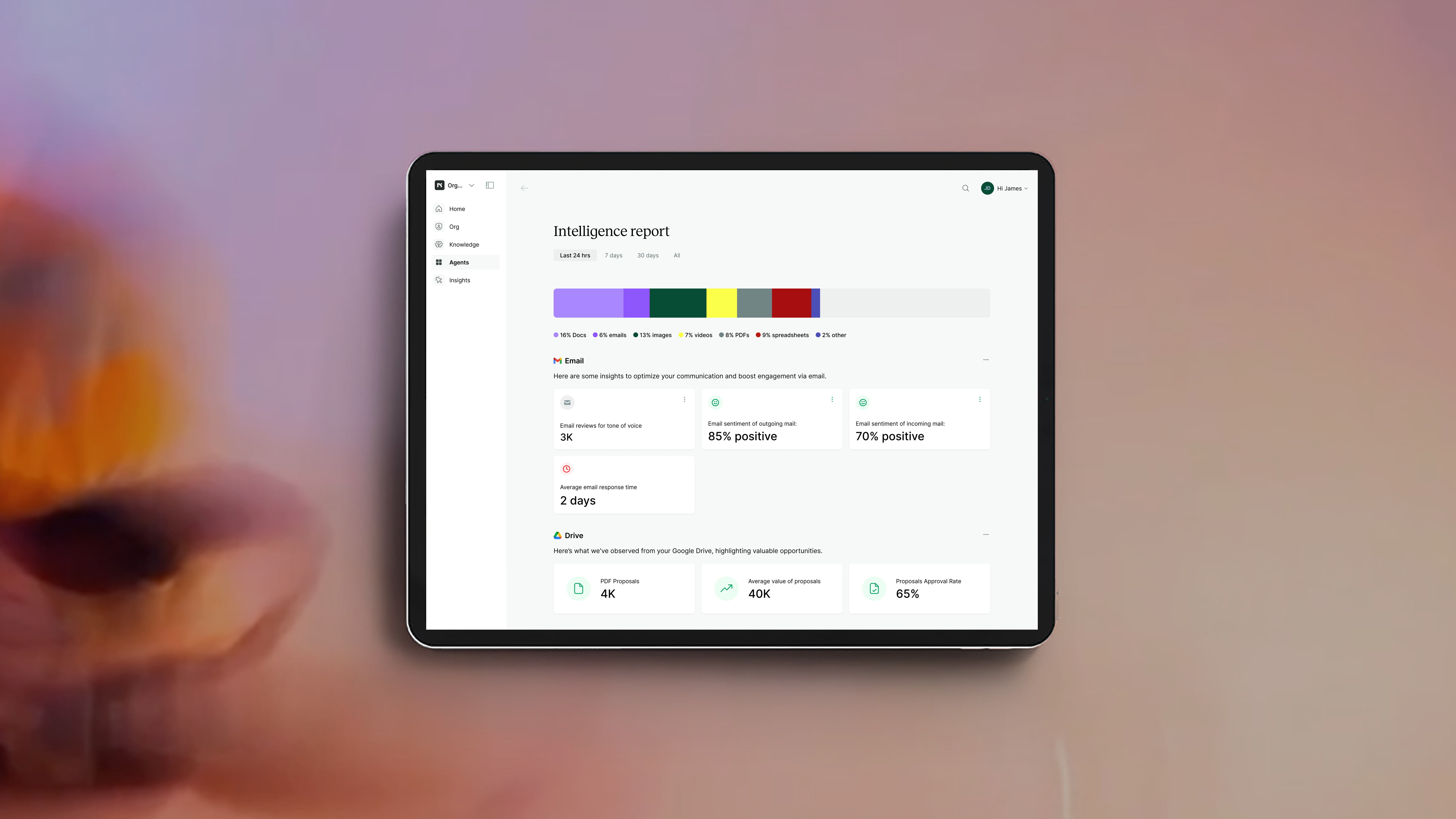
The Onboarding Studio was built around the idea of “AI made approachable.” The design focused on modularity, progressive onboarding, and clear visual feedback to help users understand each step of agent creation and deployment.
Key Feature Implementation & User Journey
I guided the build by prioritizing user confidence and transparent functionality, resulting in the following core features:
1. Guided Configuration
2. Centralized Management Dashboard
3. Cost-Effective Deployment
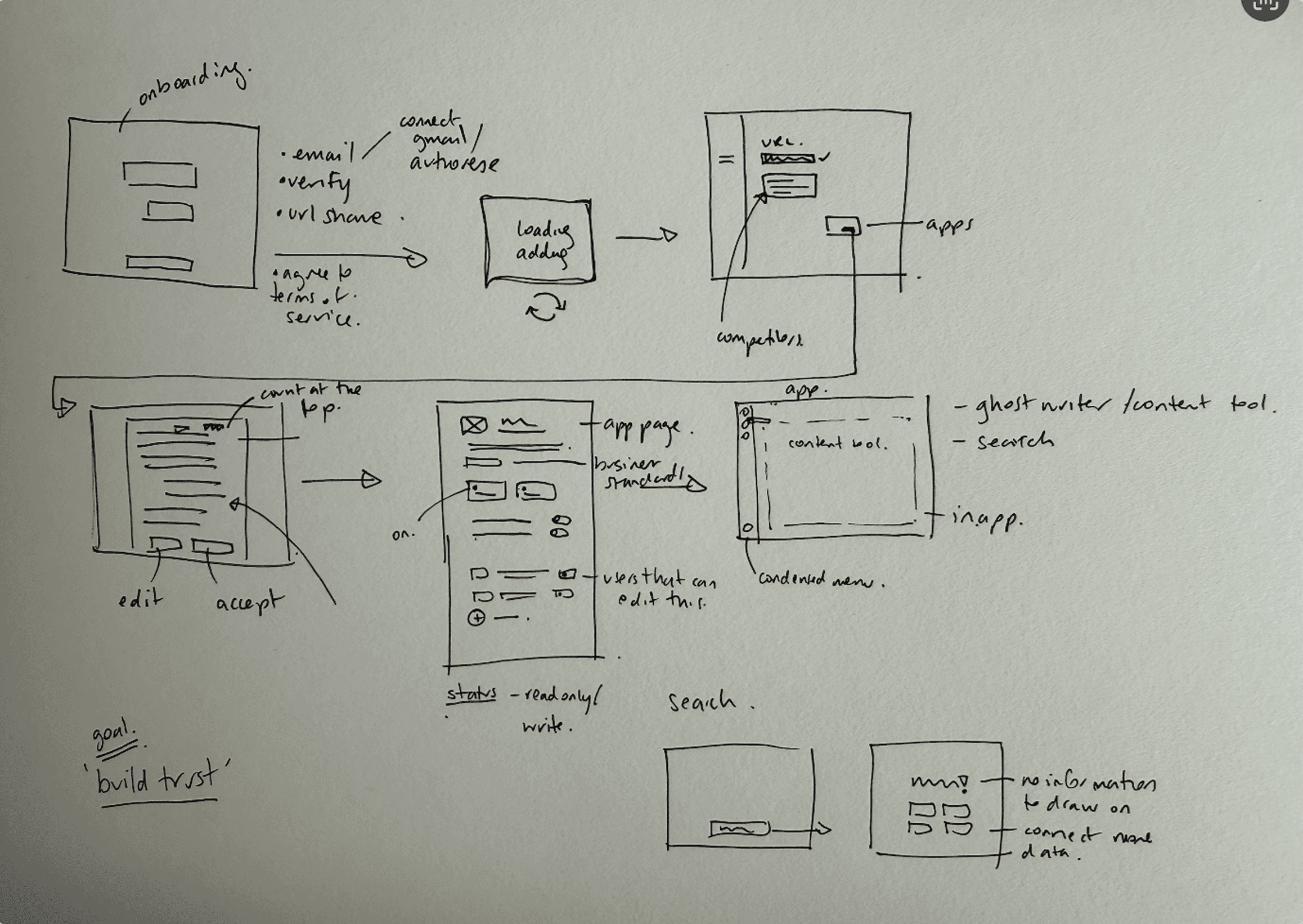
Wireframes
The initial wireframes were informed by prior UX research. I immediately analyzed this foundational work to grasp the client's vision, user journey, and key interaction flows, which this wireframe now illustrates through its basic layout and conceptual flow.
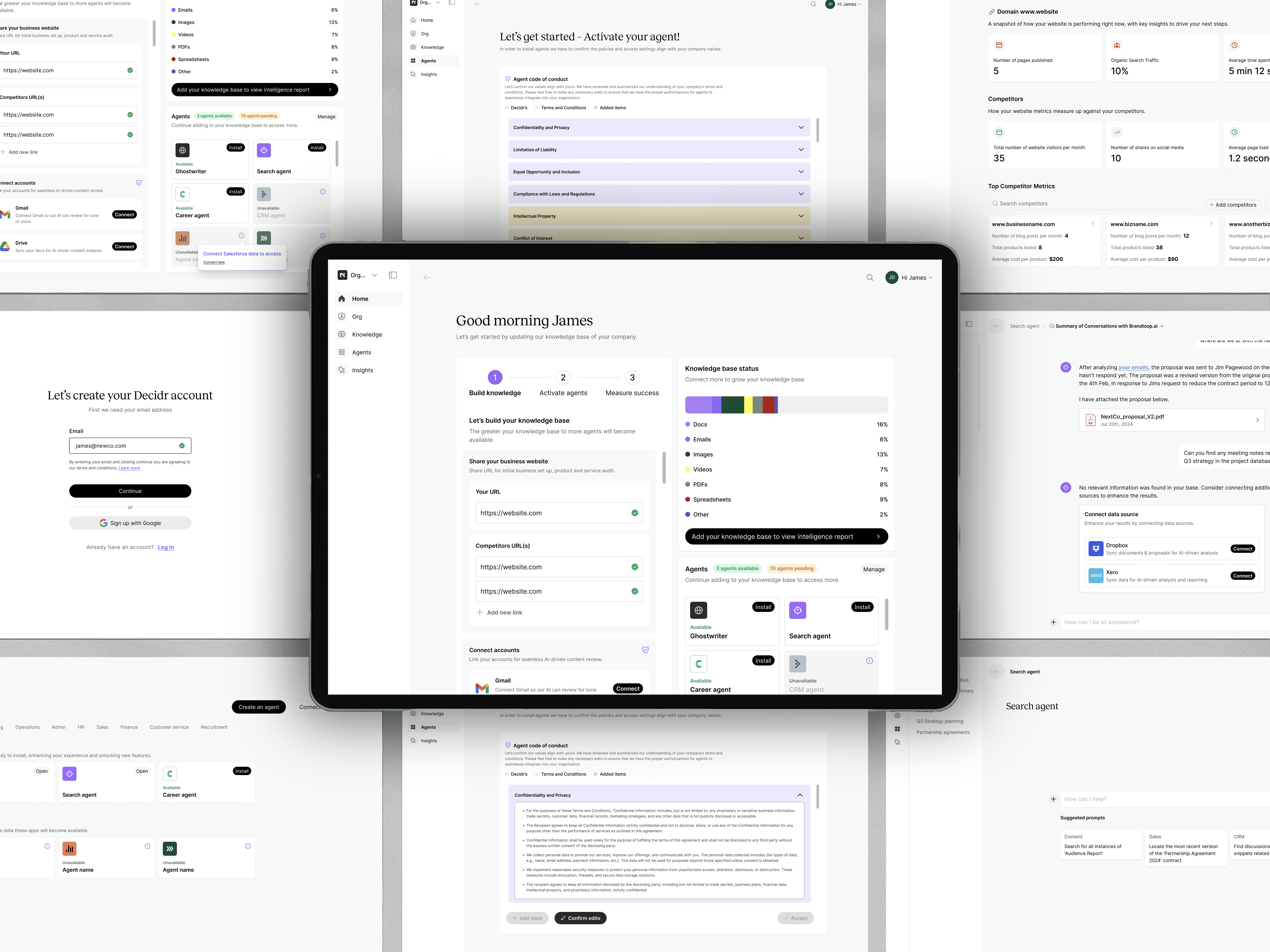
Design approach
The visual direction emphasizes approachability, trust, and sophistication, key values for a platform introducing automation to traditional workflows.
Adaptive Components: The interface flexes to different AI domains, maintaining consistency across diverse use cases.
Data Visualization: Clear, lightweight charts communicate performance and usage at a glance.
Scalable Structure: The modular framework allows new AI agent categories to be added without redesigning the system.
Impact
Accelerated Deployment & Reduced Friction: The simplified flow cut the average AI agent setup time by 45% during testing, contributing to a 22% reduction in confusion-related support tickets during the initial user lifecycle.
Democratized AI Adoption: By simplifying complex AI workflows, the platform successfully created an accessible pathway, resulting in 70% of new sign-ups having no prior experience using dedicated AI tools.
Reflection
Designing Decidr’s Onboarding Studio challenged me to rethink how AI platforms communicate complexity. The goal was to craft an experience that not only looked intuitive but felt empowering, transforming something inherently technical into a seamless, human-centered product. The project deepened my understanding of product scalability, user education, and how design can make emerging technologies more inclusive. It was also my first experience designing for a SaaS platform, which gave me valuable insight into the dynamics of building for that space.
anikashah021@gmail.com
© 2026 Anika Shah