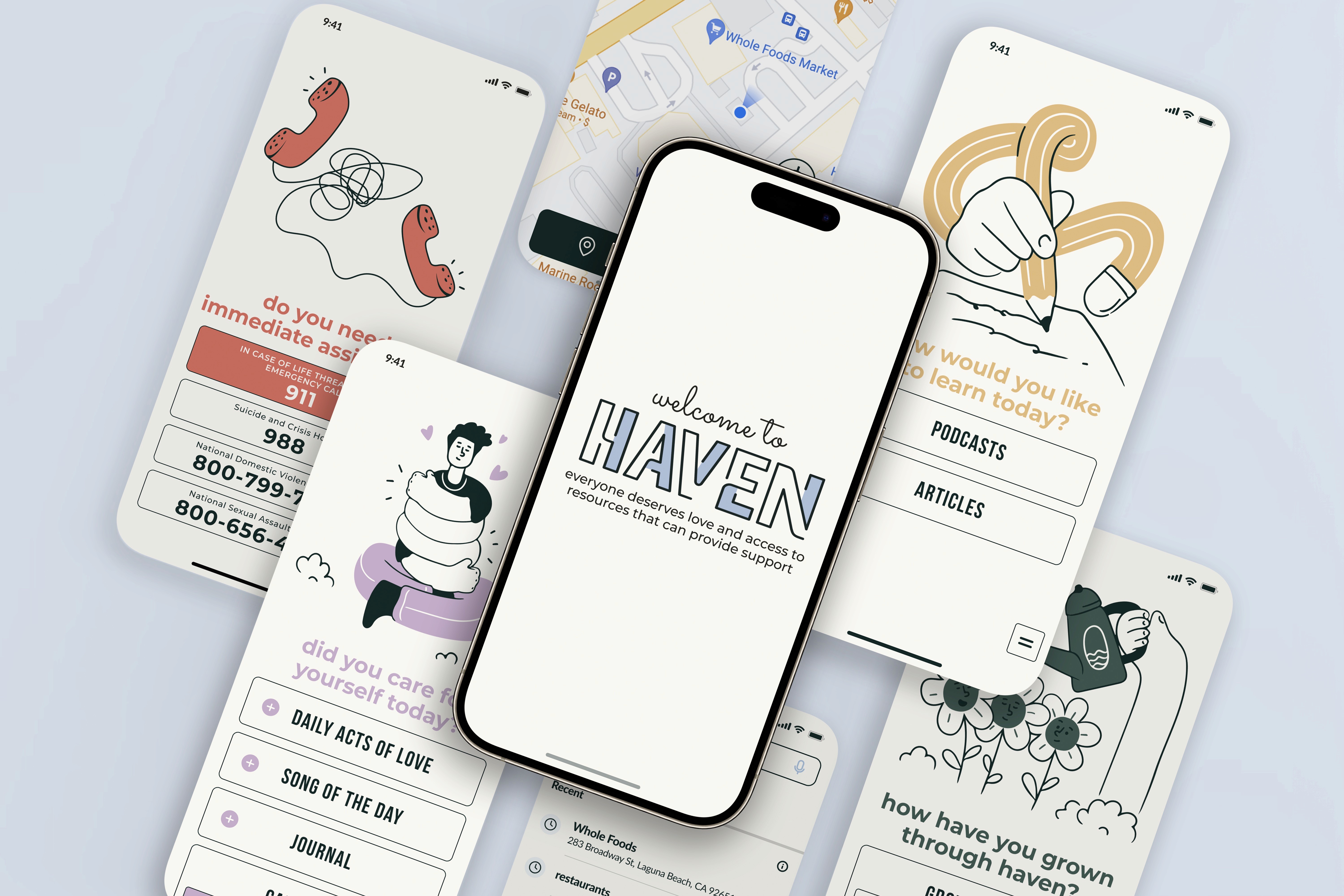
Haven is a discreet app that helps survivors of domestic violence and sexual assault access support and resources when it’s hardest to ask for help.
Context
Survivors often live with their abusers and struggle to access resources safely, making mental clarity and discreet support essential first steps.
My role
Product Designer
UX Researcher
Brand Designer
Prototyping Specialist
Timeline
8 weeks
The challenge
What options do survivors have for finding support when they’re under constant threat at home?
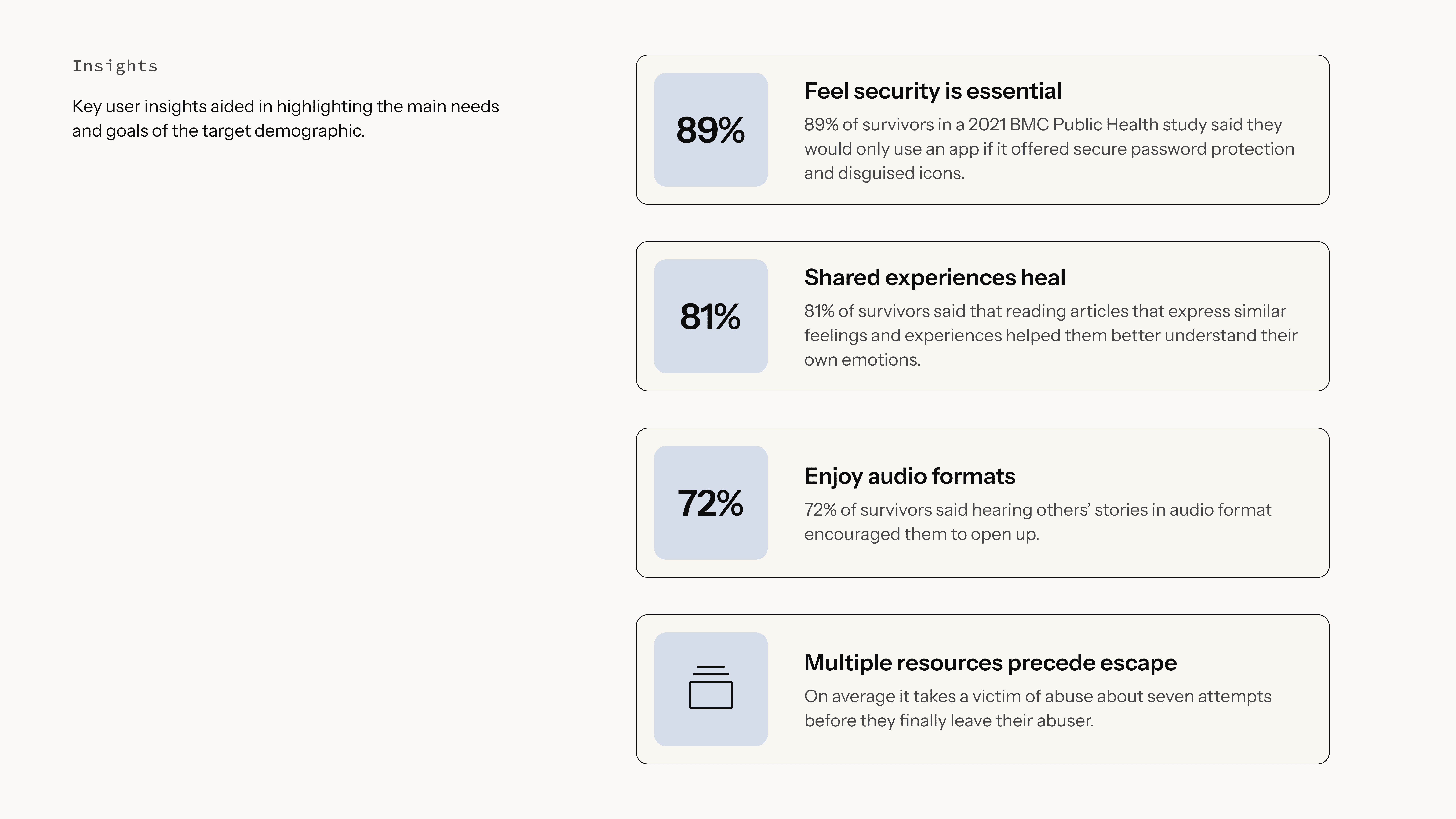
Understanding the user
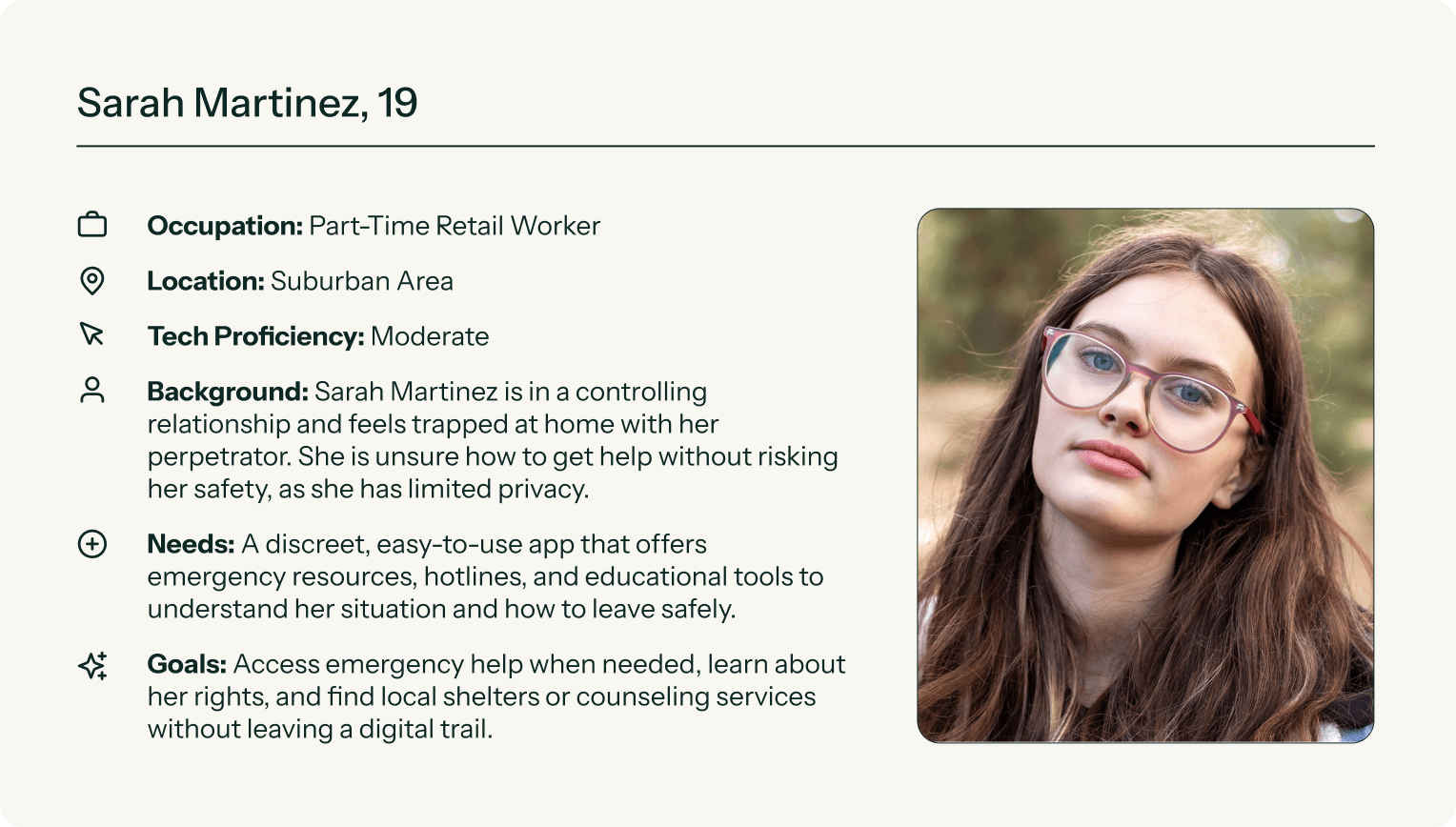
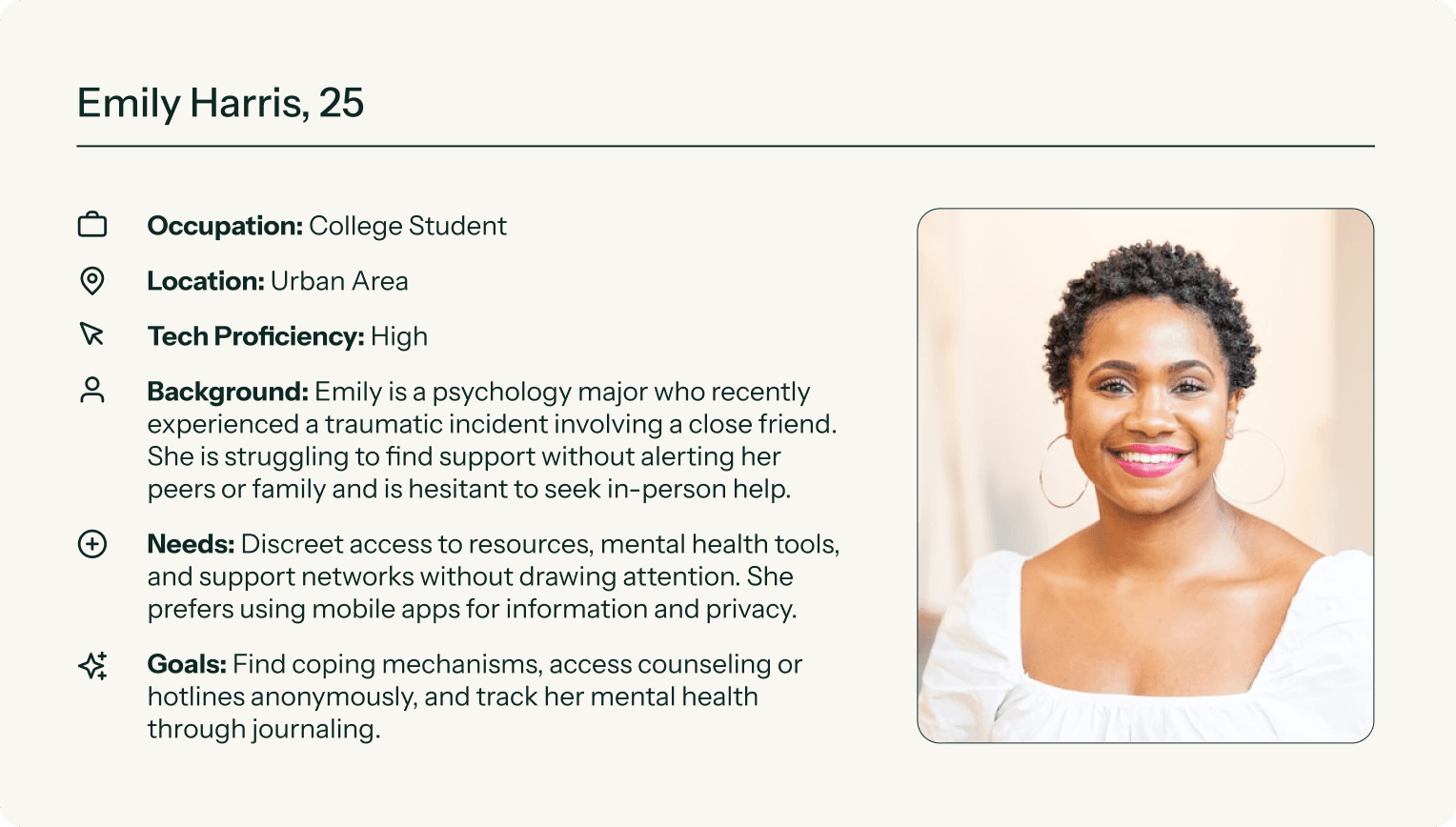
To ground the design in real user needs, I created two personas based on research insights to guide both information architecture and user testing.
User personas
Women aged 18-25 are at higher risk for sexual assault and domestic violence and are more likely to engage with digital tools.
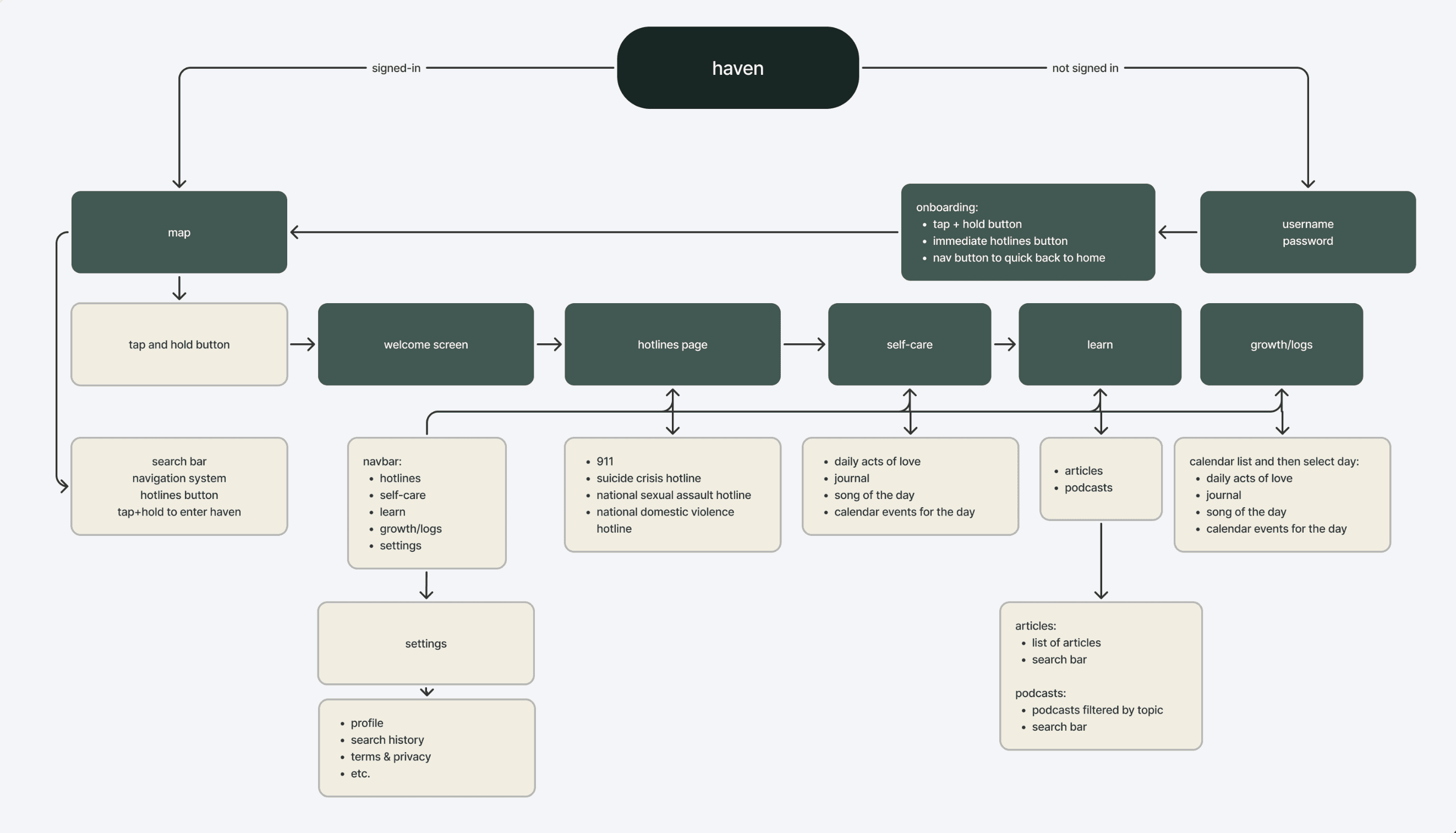
Information architecture
After outlining the core goals, I structured the information architecture to highlight the most vital features, making sure that critical support resources were not only easy to find but also discreet and intuitive for users navigating high-stress situations.
Competitive audit
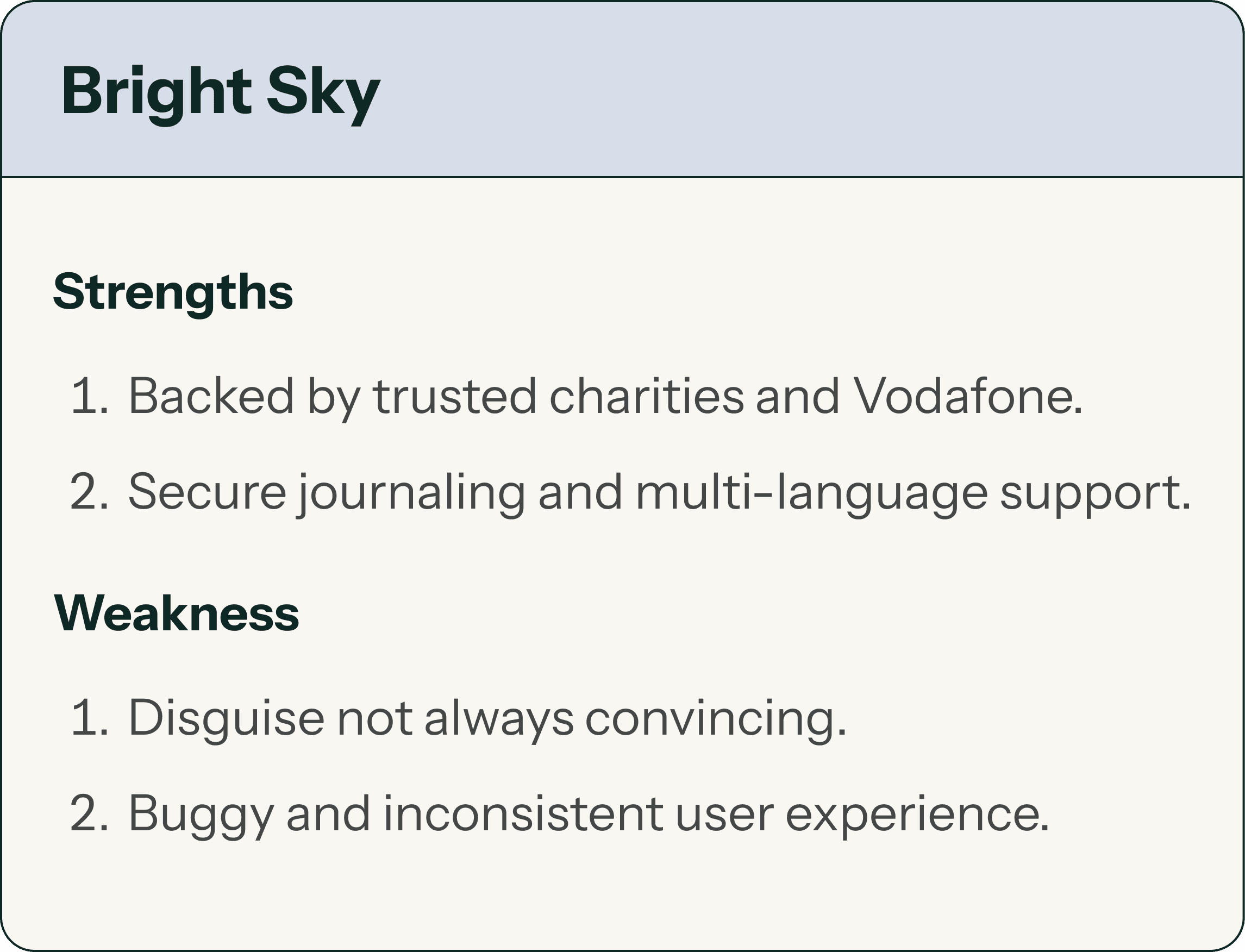
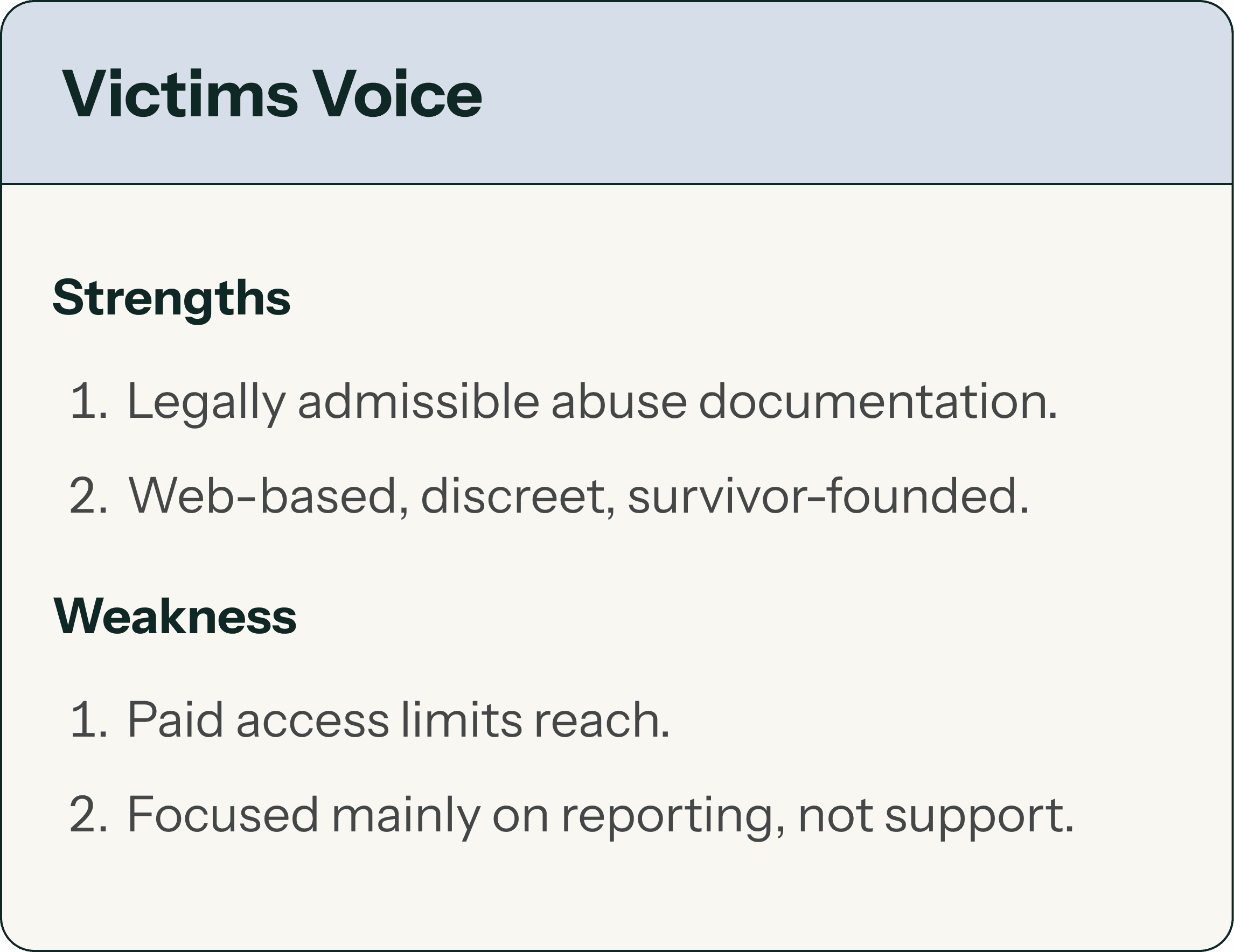
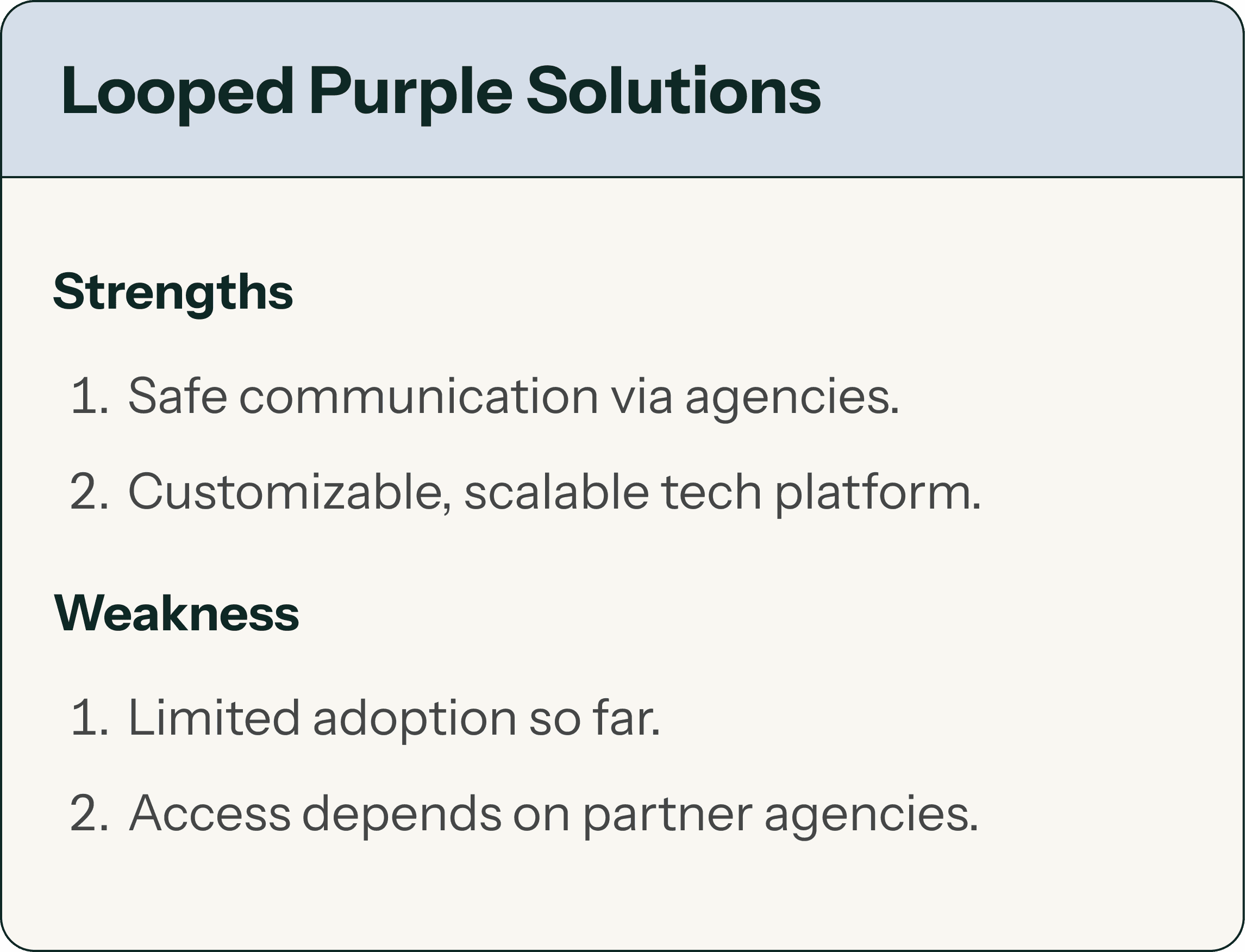
To identify the strengths and gaps in existing solutions, I conducted a competitive audit of a variety of resource apps.
The solution
With all research and direction in mind I set out to design a product that not only made it easier for survivors to access resources, but also made them feel safe and comfortable using them.
This led to design choices like disguised navigation, quick hotline access, a habit tracker, and calming content such as articles and podcasts, offering survivors both emotional support and a renewed sense of control.
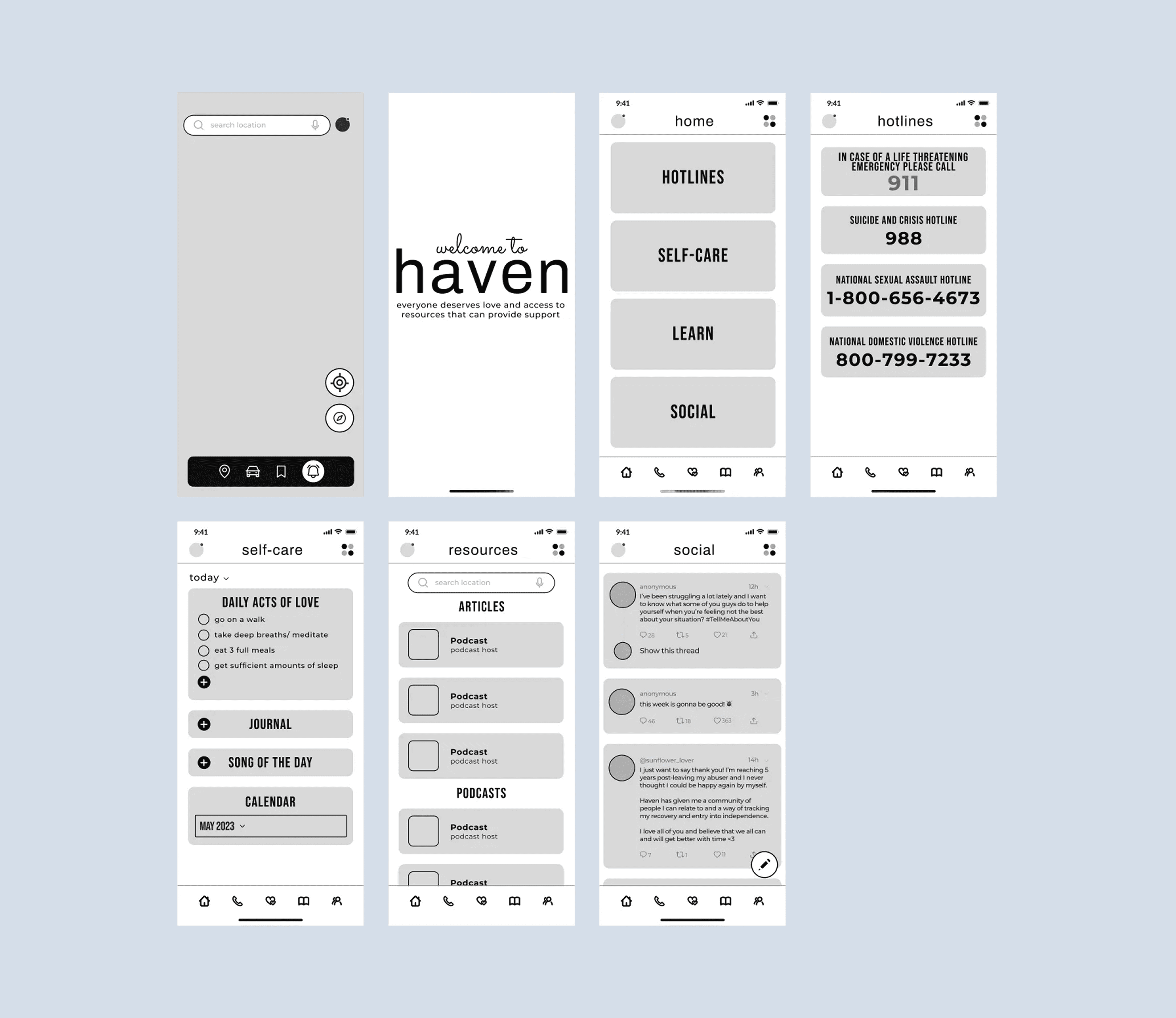
Initial wireframes
The initial wireframes leaned toward a functional, almost brutalist style that lacked emotional warmth. Feedback highlighted the need for a simpler, more calming experience to better reflect the sensitivity of the topic.
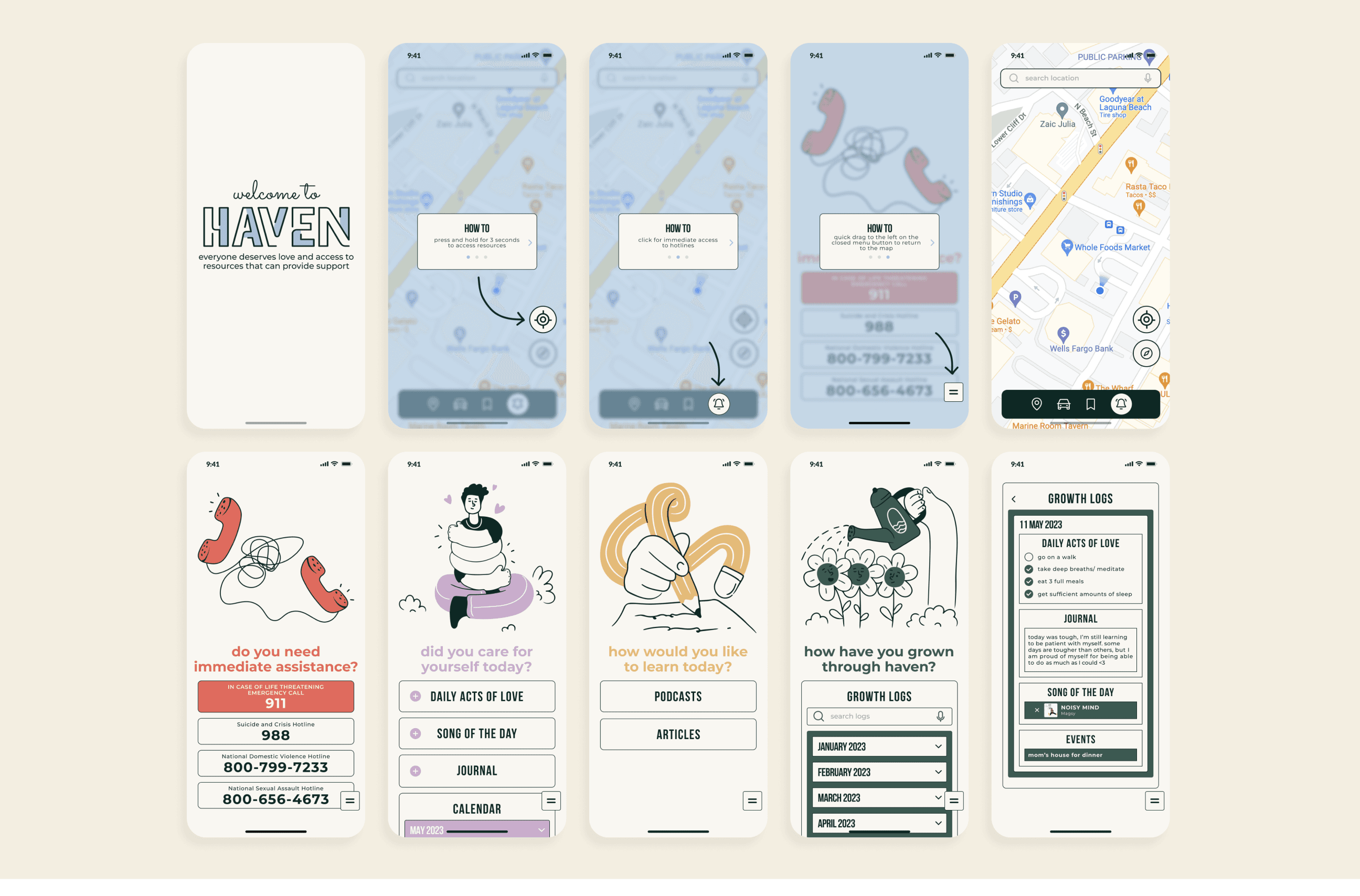
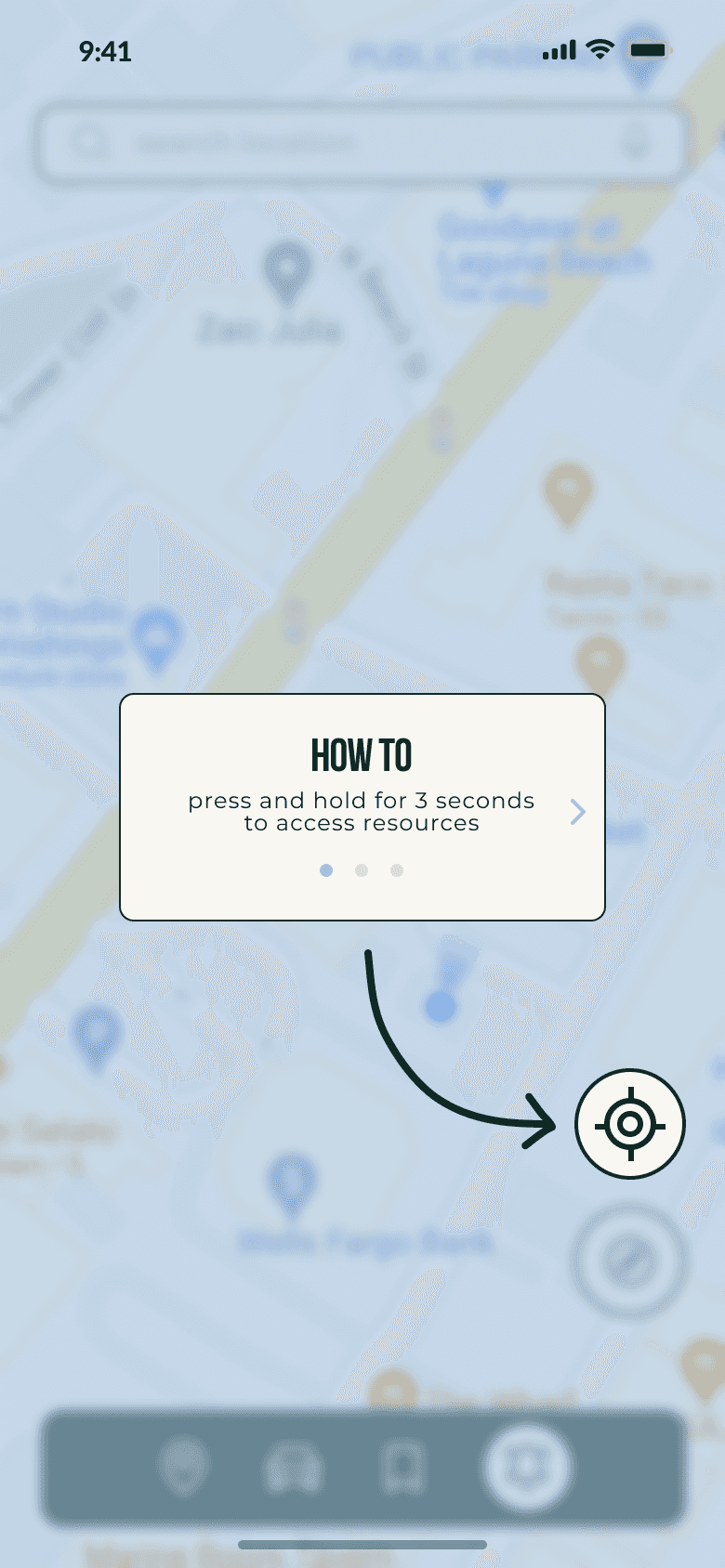
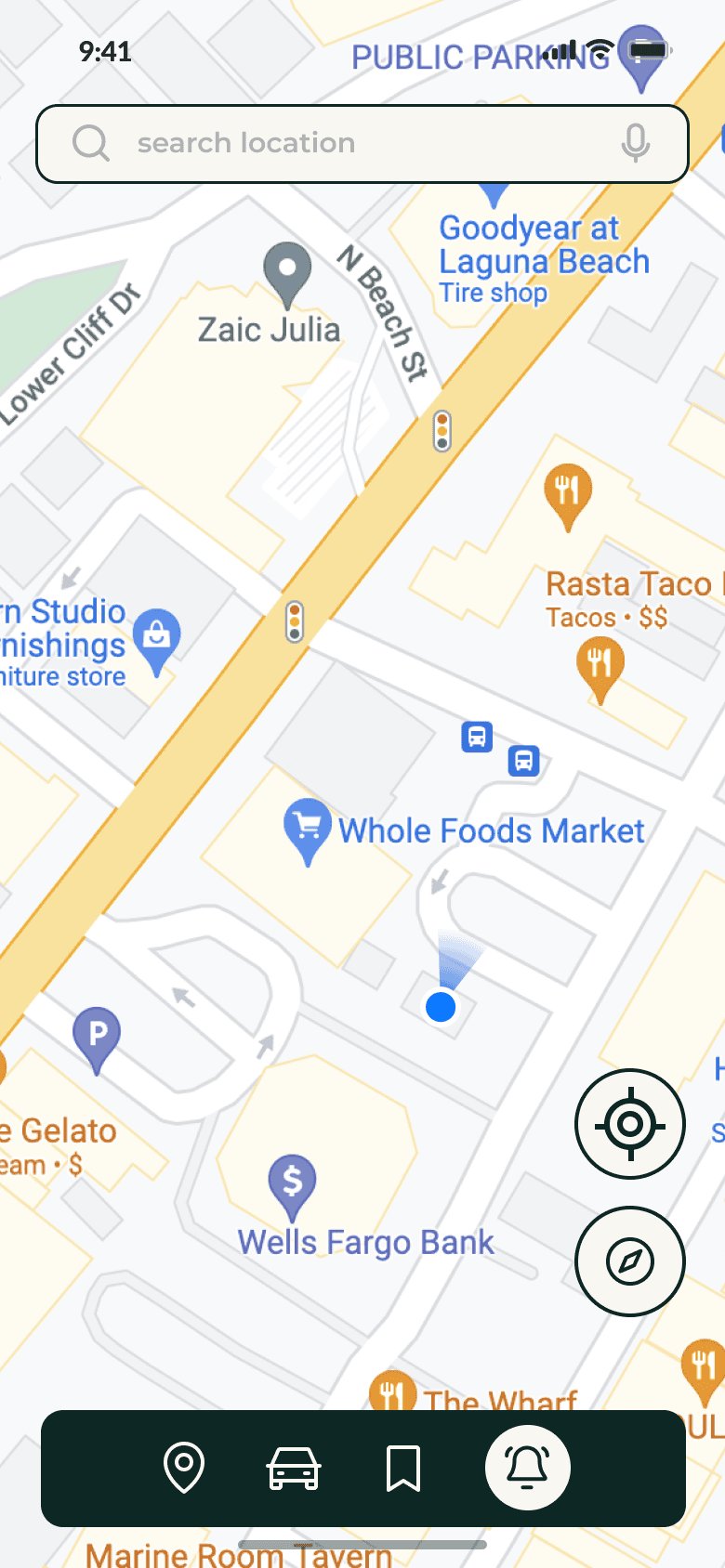
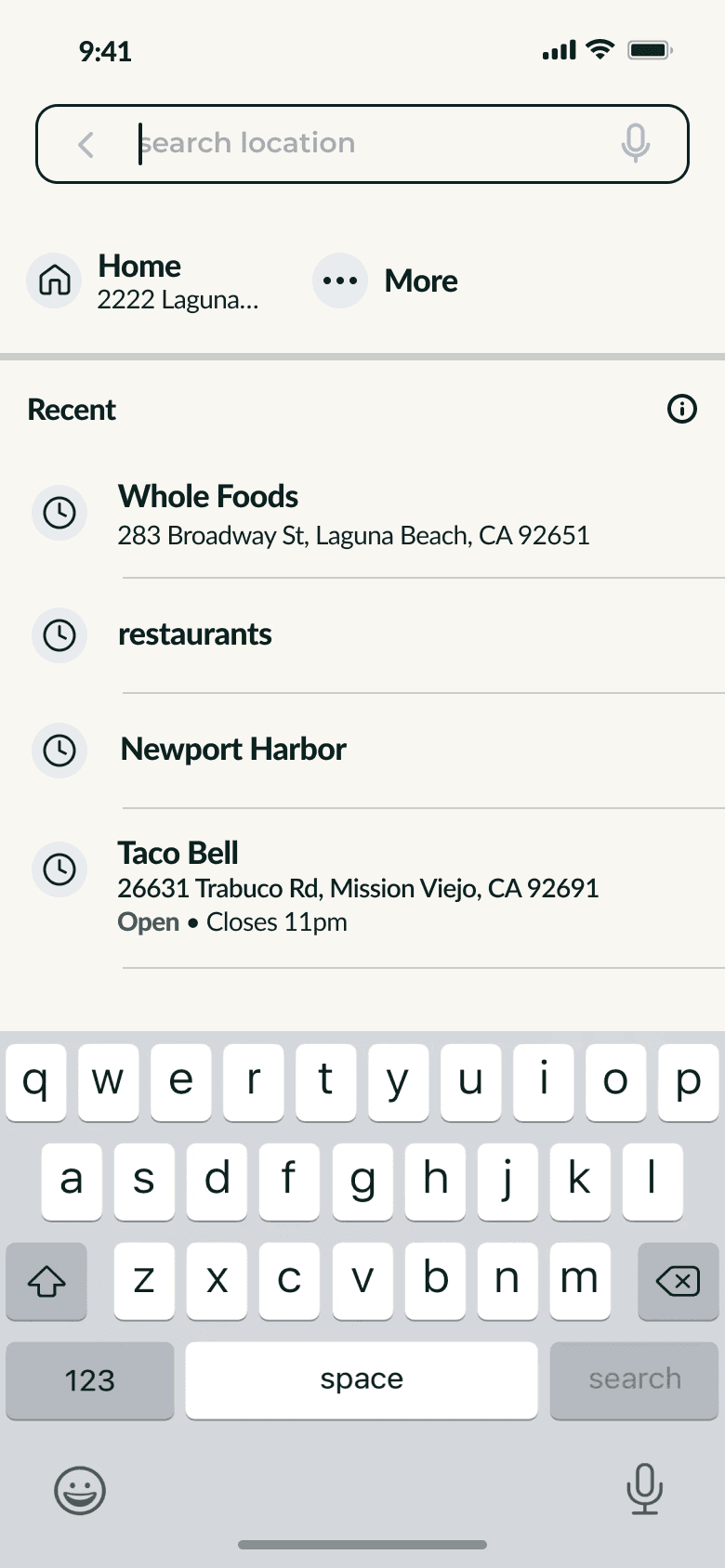
Map navigation
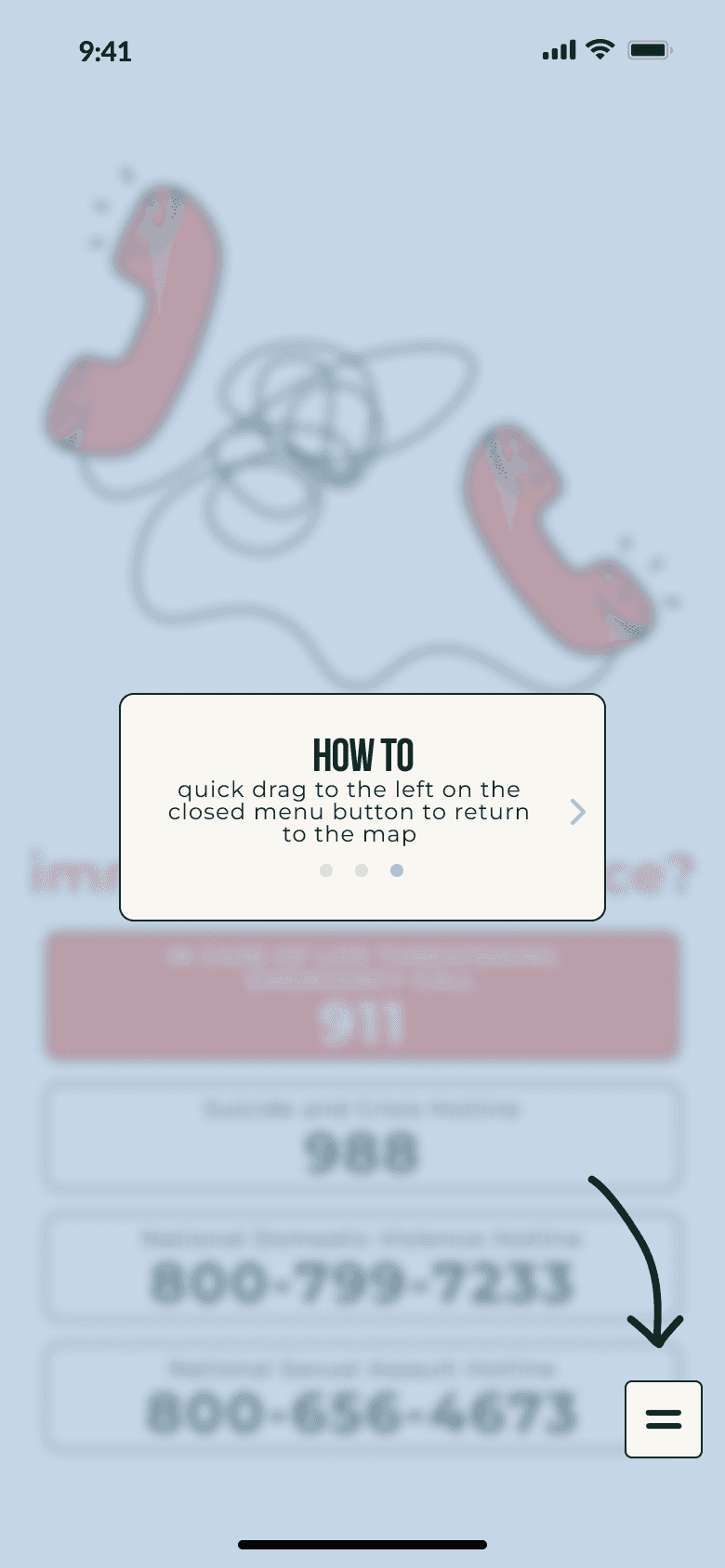
Pre-entry onboarding guides users through disguised navigation and key safety features, ensuring they can confidently access support without drawing attention. Haven also functions as a real navigation tool, allowing survivors to use it in front of a perpetrator if needed.
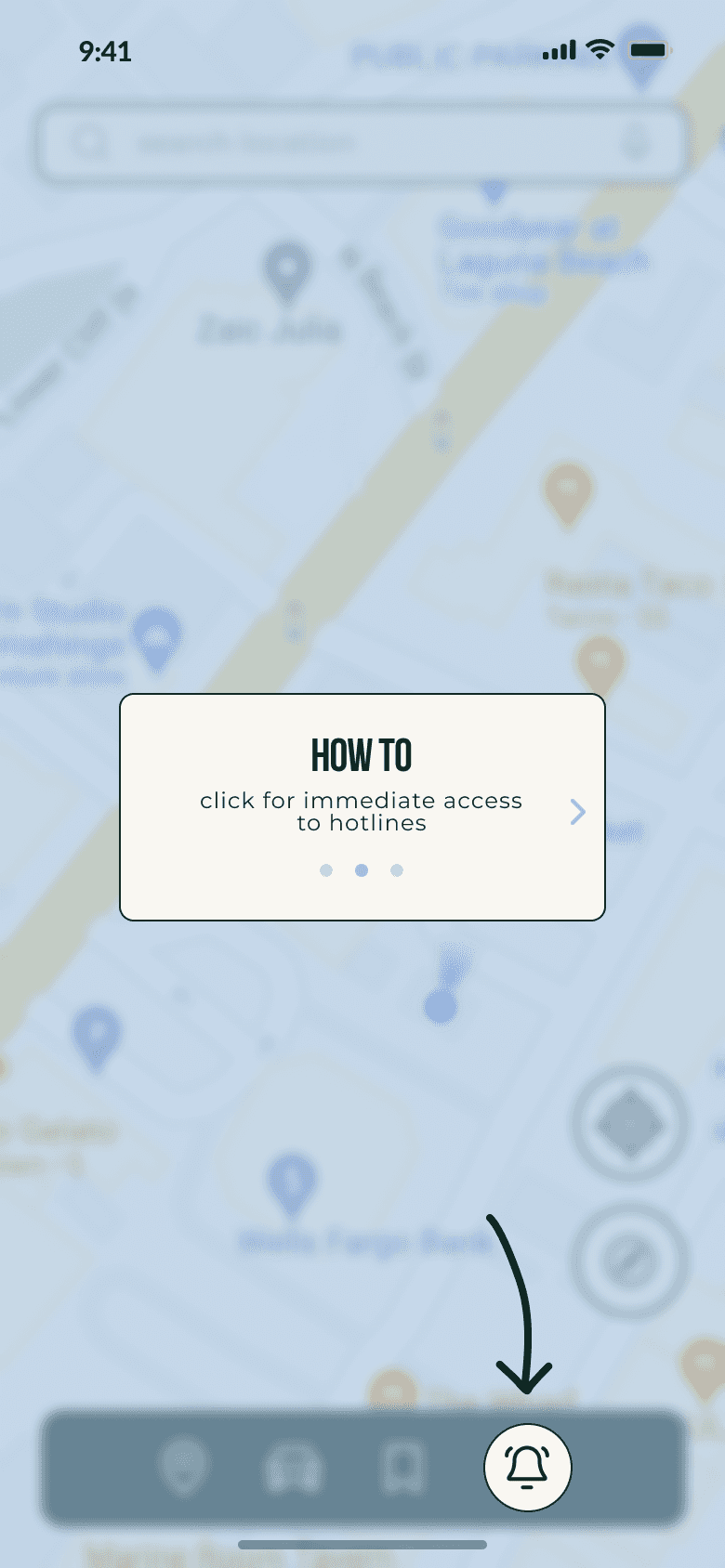
Hotlines
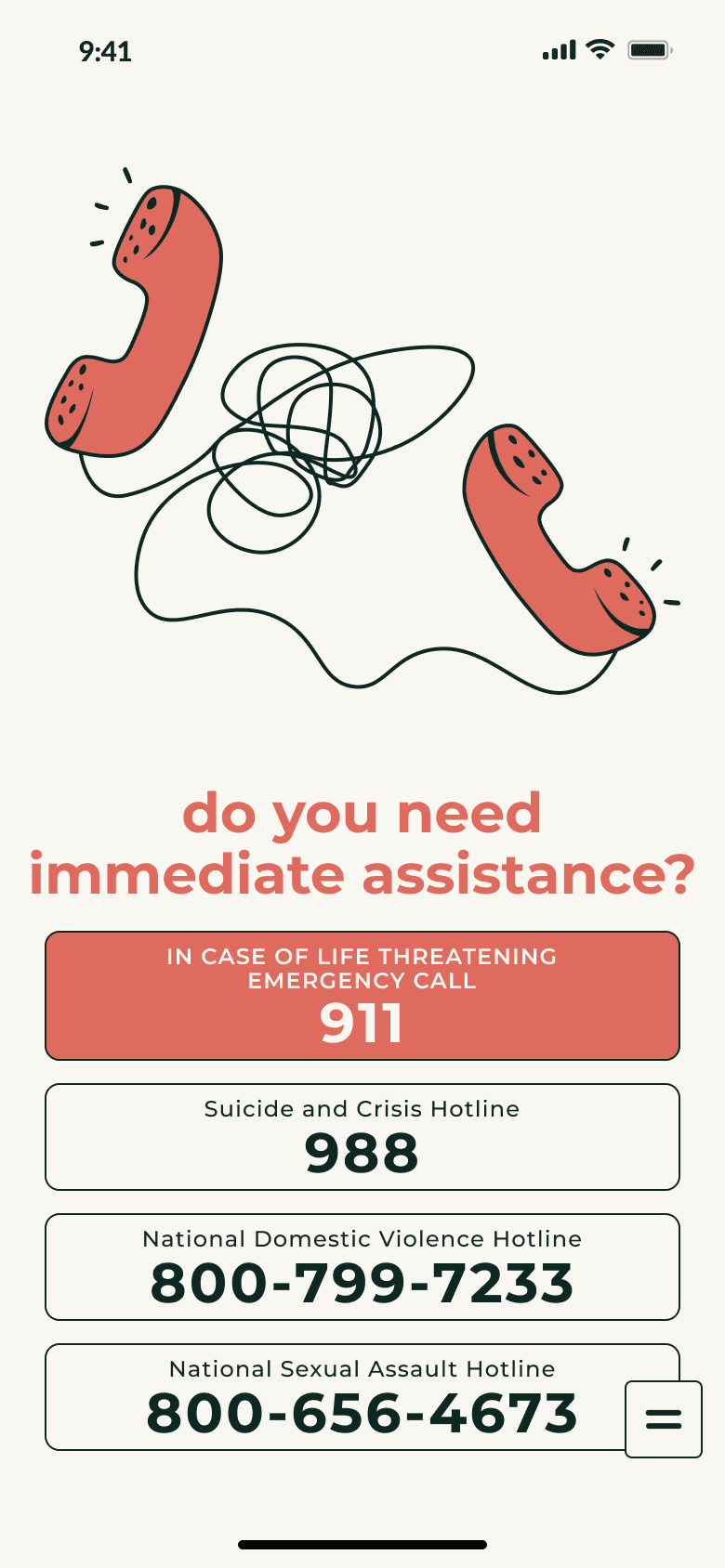
Because the Hotlines page serves a life-saving function, it was positioned as the app’s home screen. The design prioritizes clarity and speed, directing users to key support services with minimal friction.
Main pages
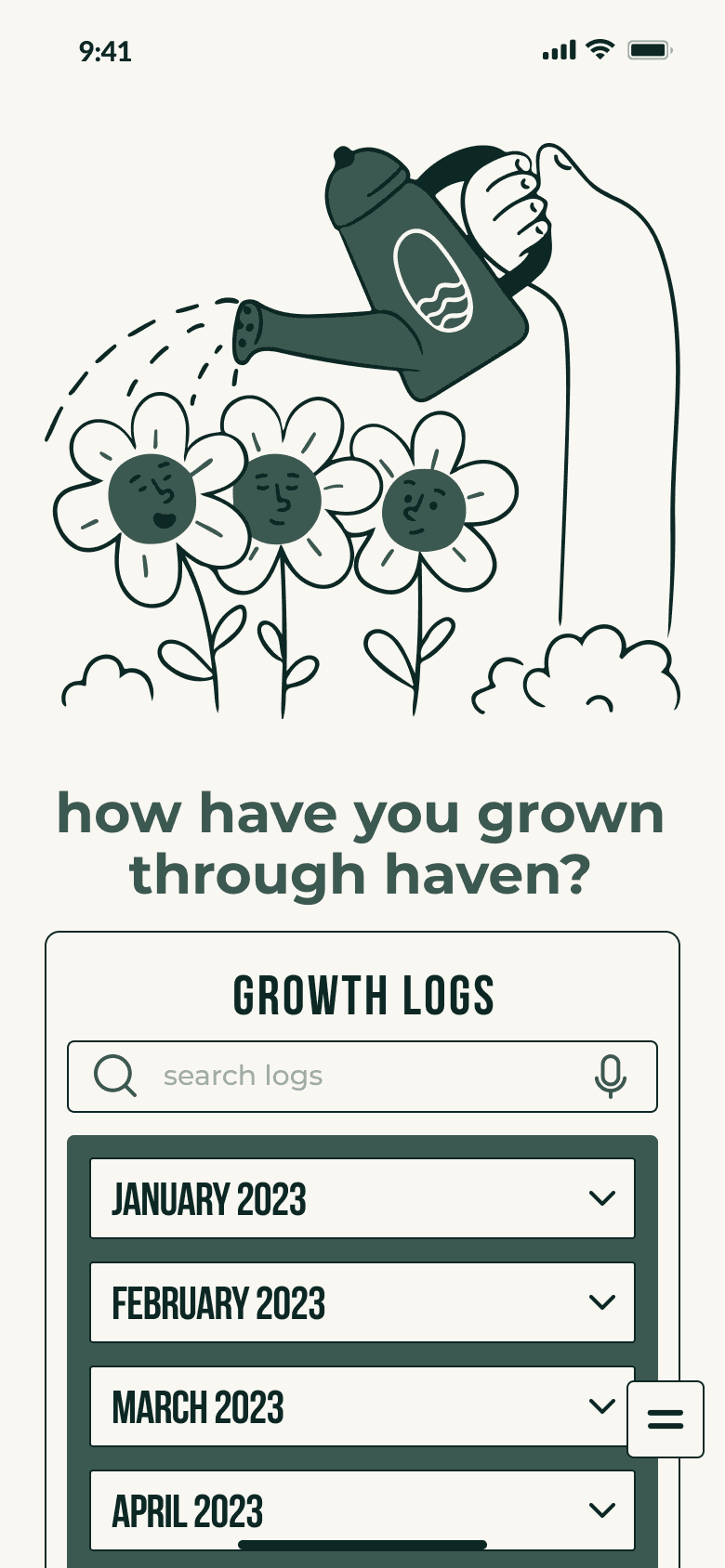
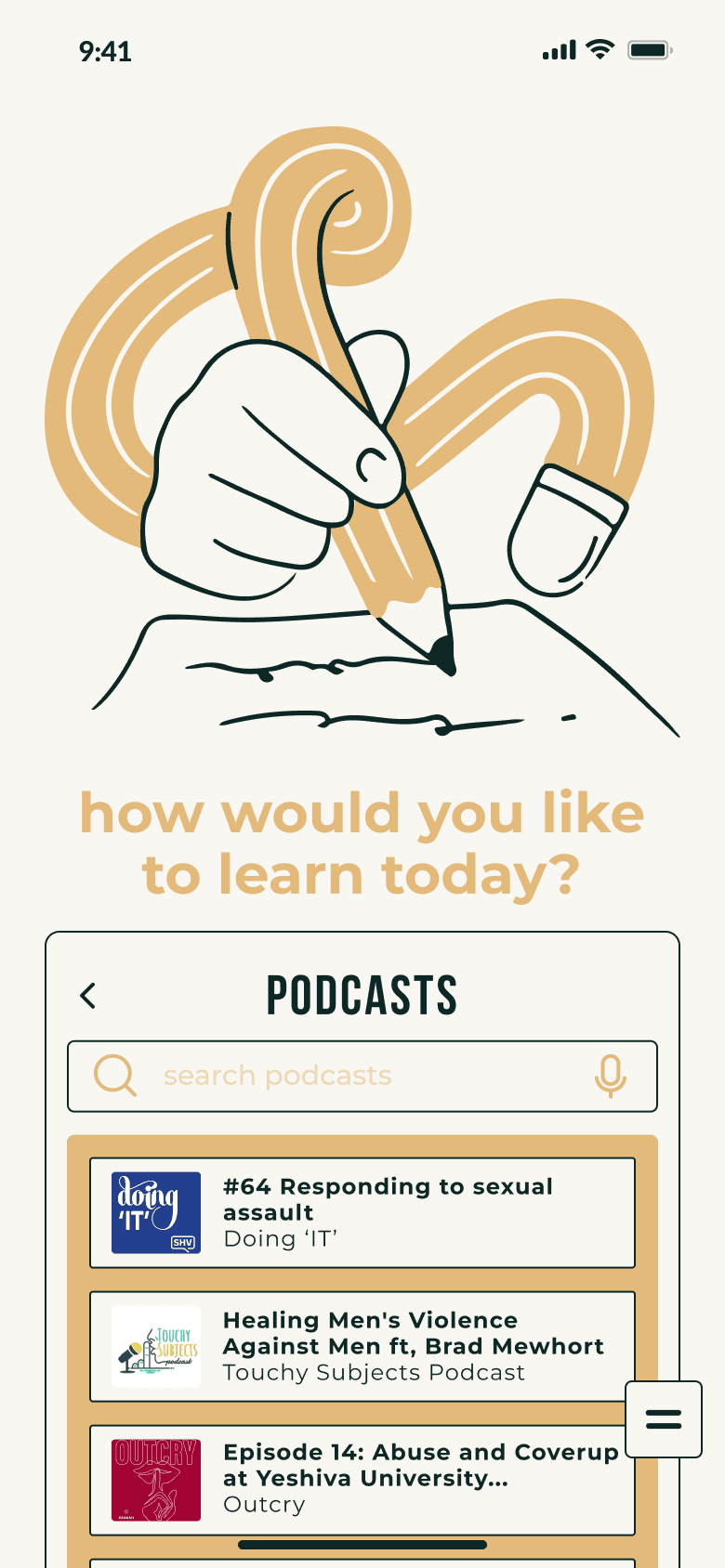
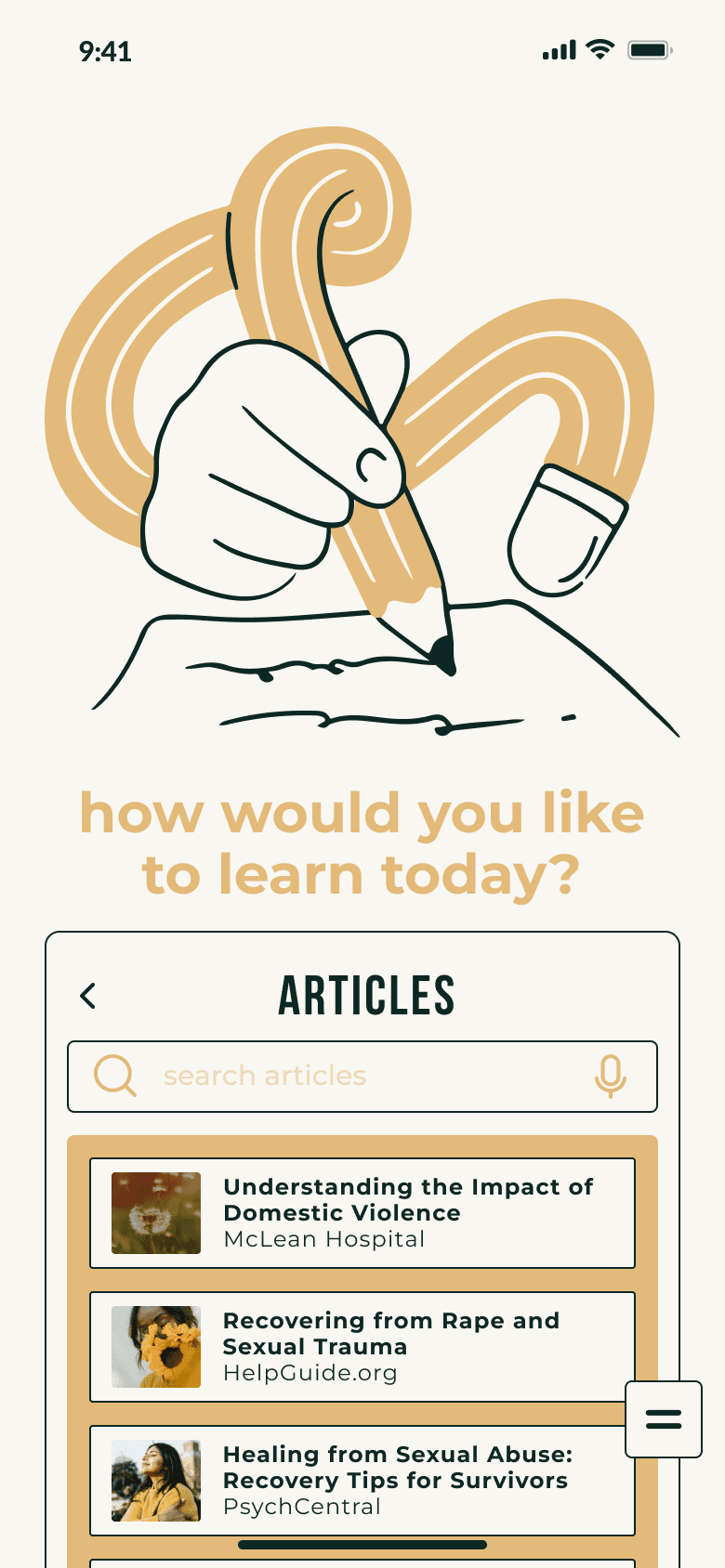
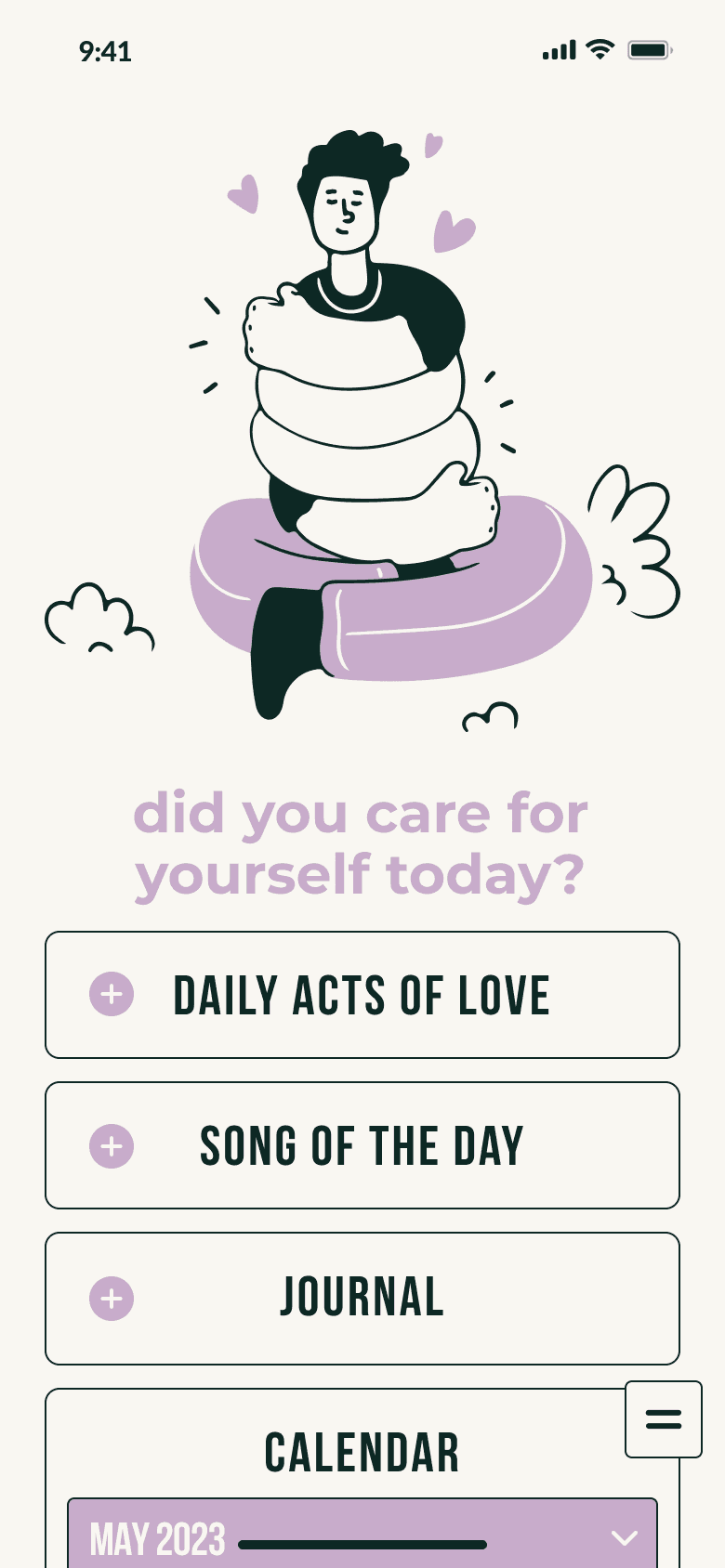
The main pages provide access to a wide range of resources informed by research insights, featuring soft, eye-friendly colors and gentle, welcoming illustrations designed to create a comforting and supportive atmosphere for survivors.
Additional design considerations
While the illustrations felt warm and approachable, I introduced micro-animations to add a sense of liveliness and make the experience more engaging.
Reflection
Through this project, I learned that recognizability can be both a strength and a risk. While consistent branding builds trust, too much visibility can compromise user safety, requiring a balance between familiarity and anonymity. Haven became an example of designing with empathy and intent, blending discretion, warmth, and usability in a sensitive space while still standing out emotionally from competitors.
I also explored how illustration and visual tone can soften serious topics without diminishing their weight, and how micro-interactions and flow impact not only usability but emotional comfort. Prototyping reinforced how thoughtful functionality directly shapes user trust.
anikashah021@gmail.com
© 2026 Anika Shah