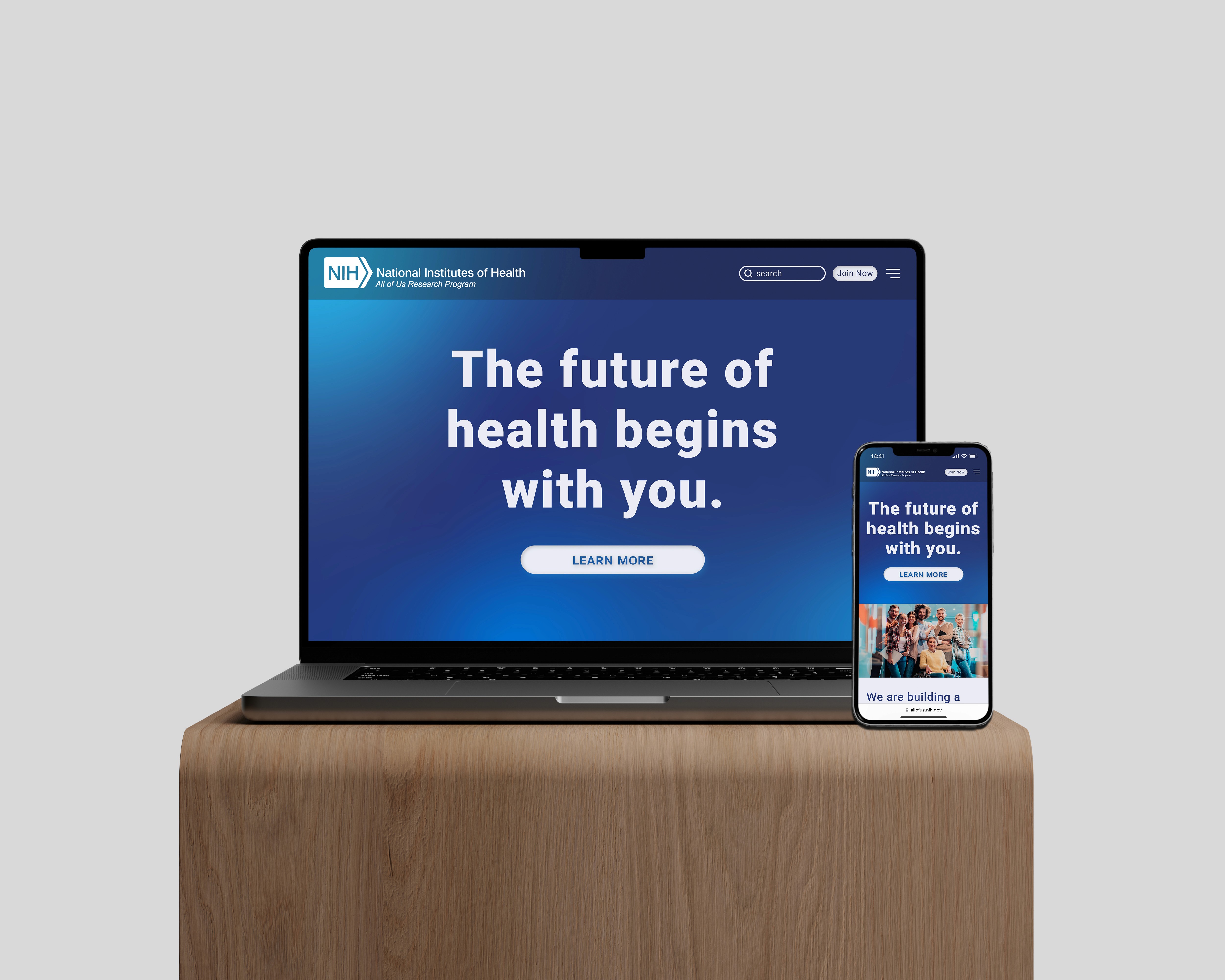
UCI’s All of Us Research Program aimed to expand its reach through marketing efforts, but its primary point of contact, the website, was outdated and in need of a redesign.
Context
UCI’s All of Us Program partnered with the NIH to build one of the largest health databases in the U.S., with the goal of identifying and preventing health issues before they occur.
My role
Product Designer
UX Researcher
Copywriter
Timeline
8 weeks
Roadmap
As the sole designer on a project of this scale, I developed a high-level working roadmap to align key stakeholders and guide the design process.
Define the challenge based on investor goals and user needs.
Gather key research insights to identify critical areas for improvement.
Develop wireframes and establish initial design directions.
Conduct user testing to validate concepts and gather feedback.
Iterate on designs based on user input and stakeholder review.
Finalize UI designs and prepare prototypes for development handoff.
The challenge
Despite exposure through guerrilla marketing, why is the website failing to capture user attention and drive engagement?
Key research insights
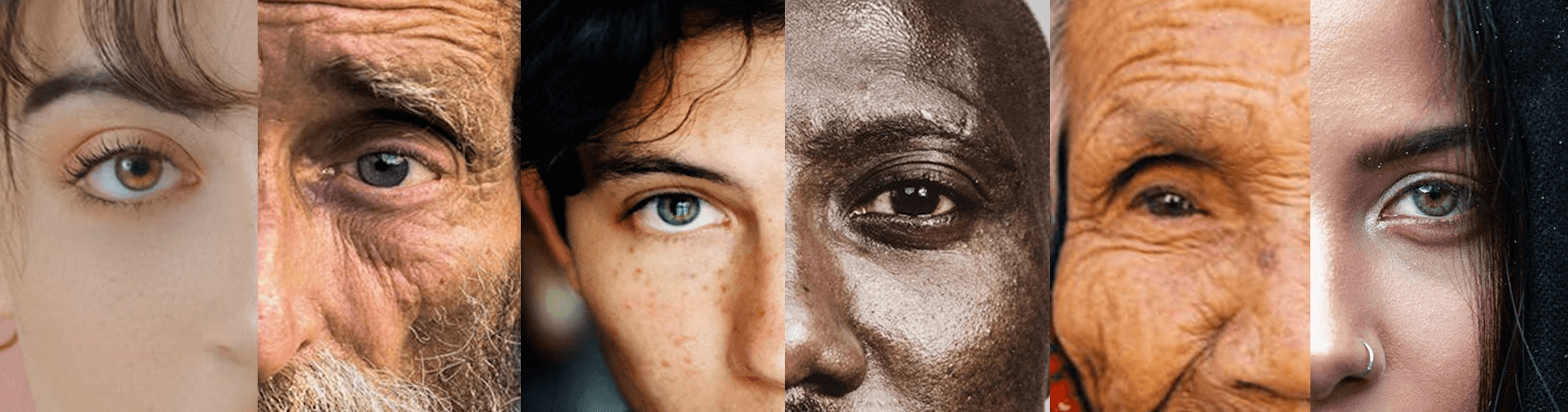
Many users, especially those from underrepresented communities– their main target audience– struggled to engage with the All of Us website due to outdated design, unclear navigation, and limited culturally relevant content.
-0.81%
total website visitors in the last month from when the project timeline began.
61.94%
bounce rate after 2.08 seconds on only the home page.
38%
of users will stop engaging with a website if the layout or content is unattractive.
Information architecture
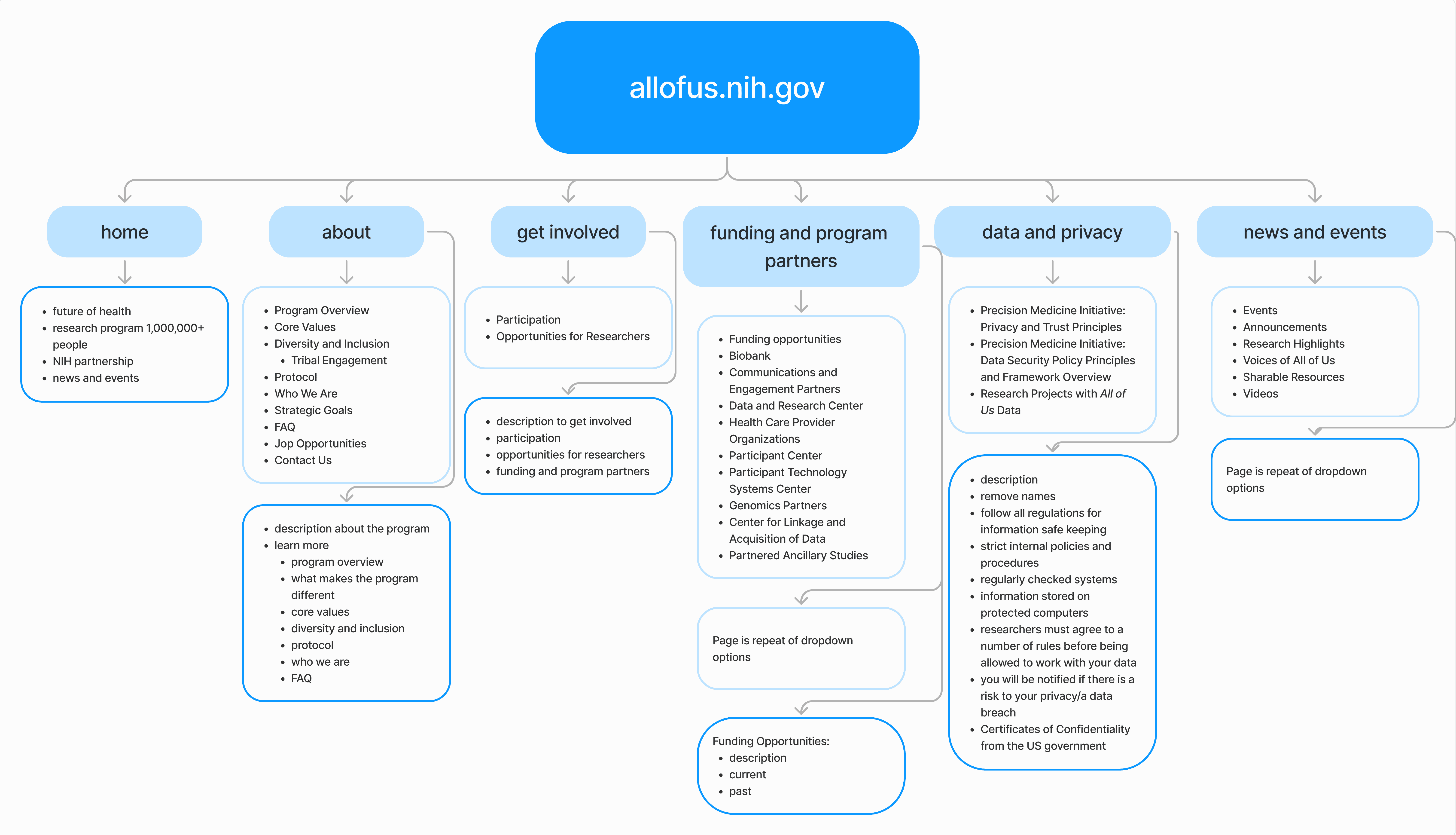
The information architecture helped me identify and prioritize the most critical areas of the app, ensuring that essential support resources were easy to find, discreetly accessible, and intuitively organized for users in crisis.
The solution
My solution was to redesign the site to be primarily image-driven, make the copy friendlier and more personable, and simplify the navigation to create a smoother, more intuitive user experience.
Wireframes
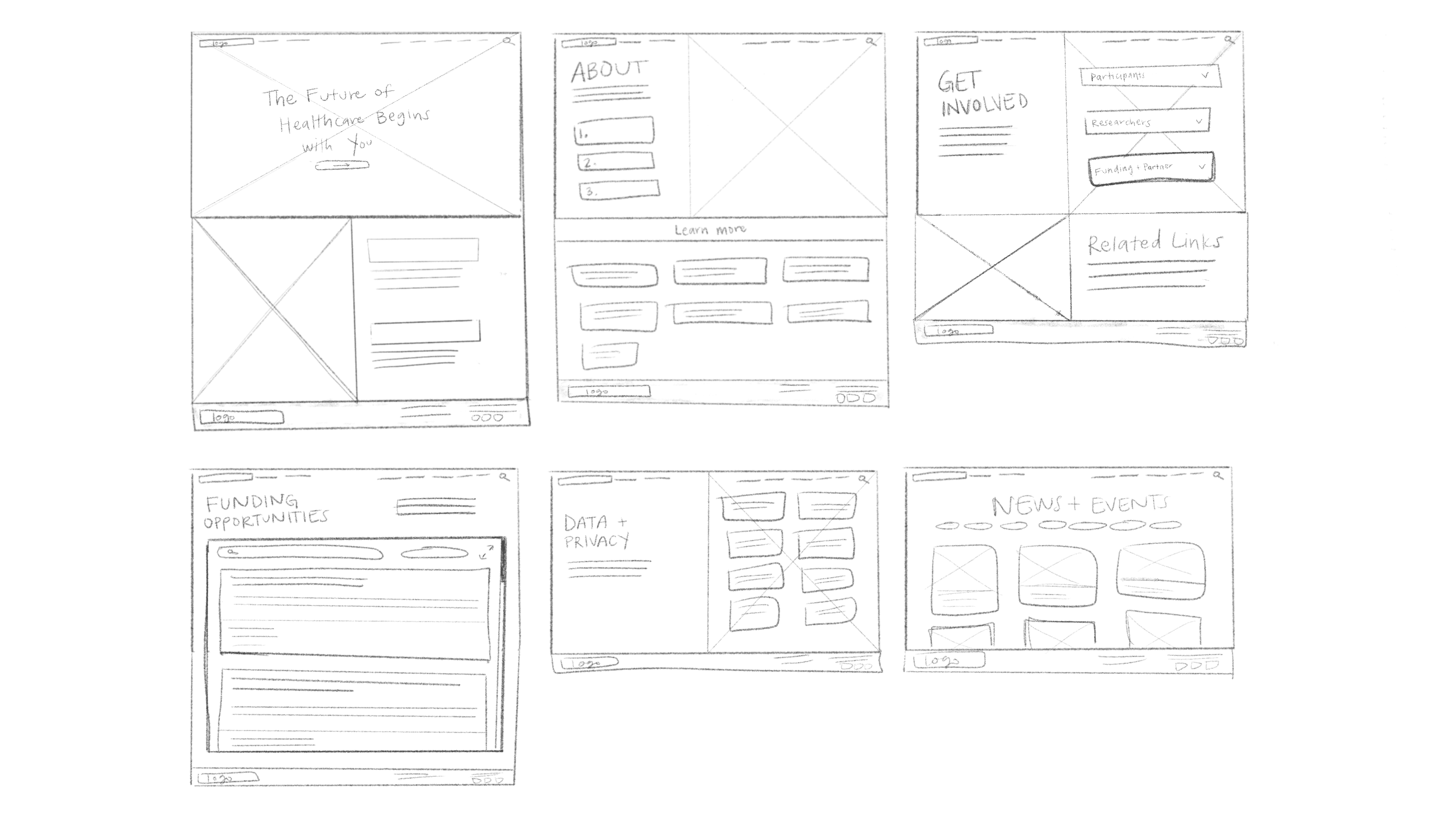
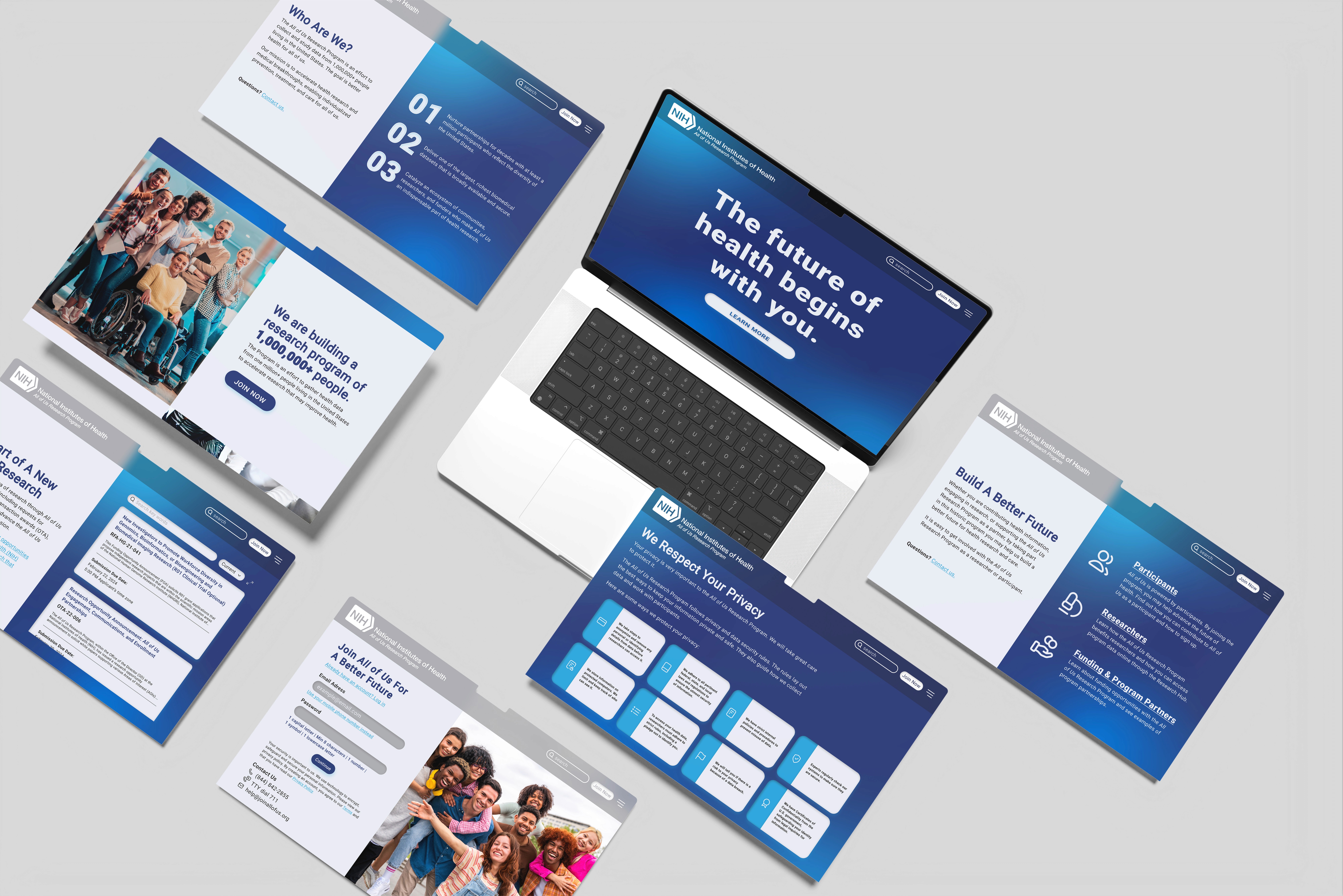
These early wireframes communicated initial ideas to redesign the site with a focus on imagery and the use of text cards, making content easier to digest and understand for users.
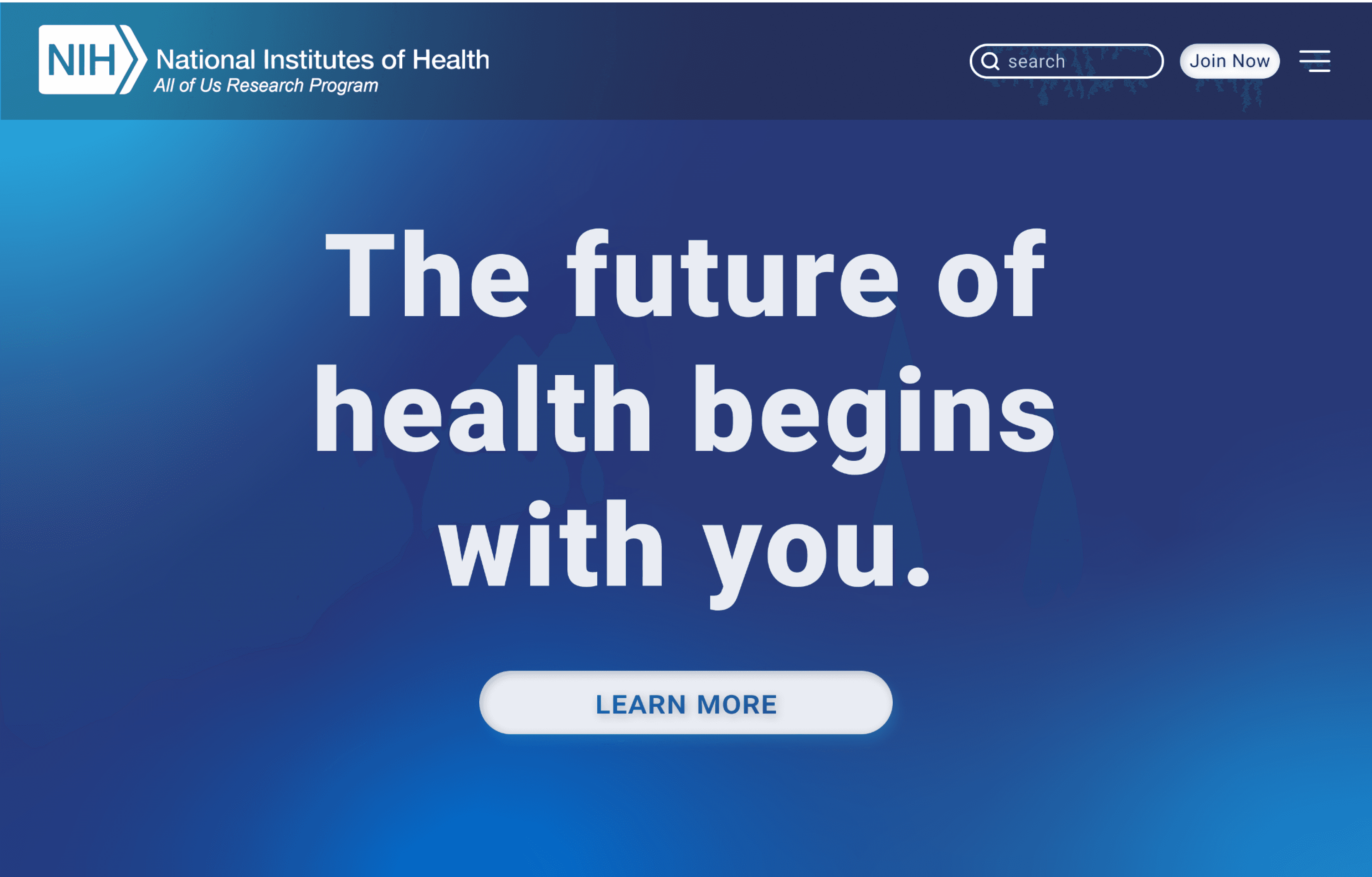
Home page
Since the homepage is the first point of contact, I redesigned it with a prominent call to action and actionable copy that empowers users, encouraging them to engage more deeply by scrolling and exploring the site.
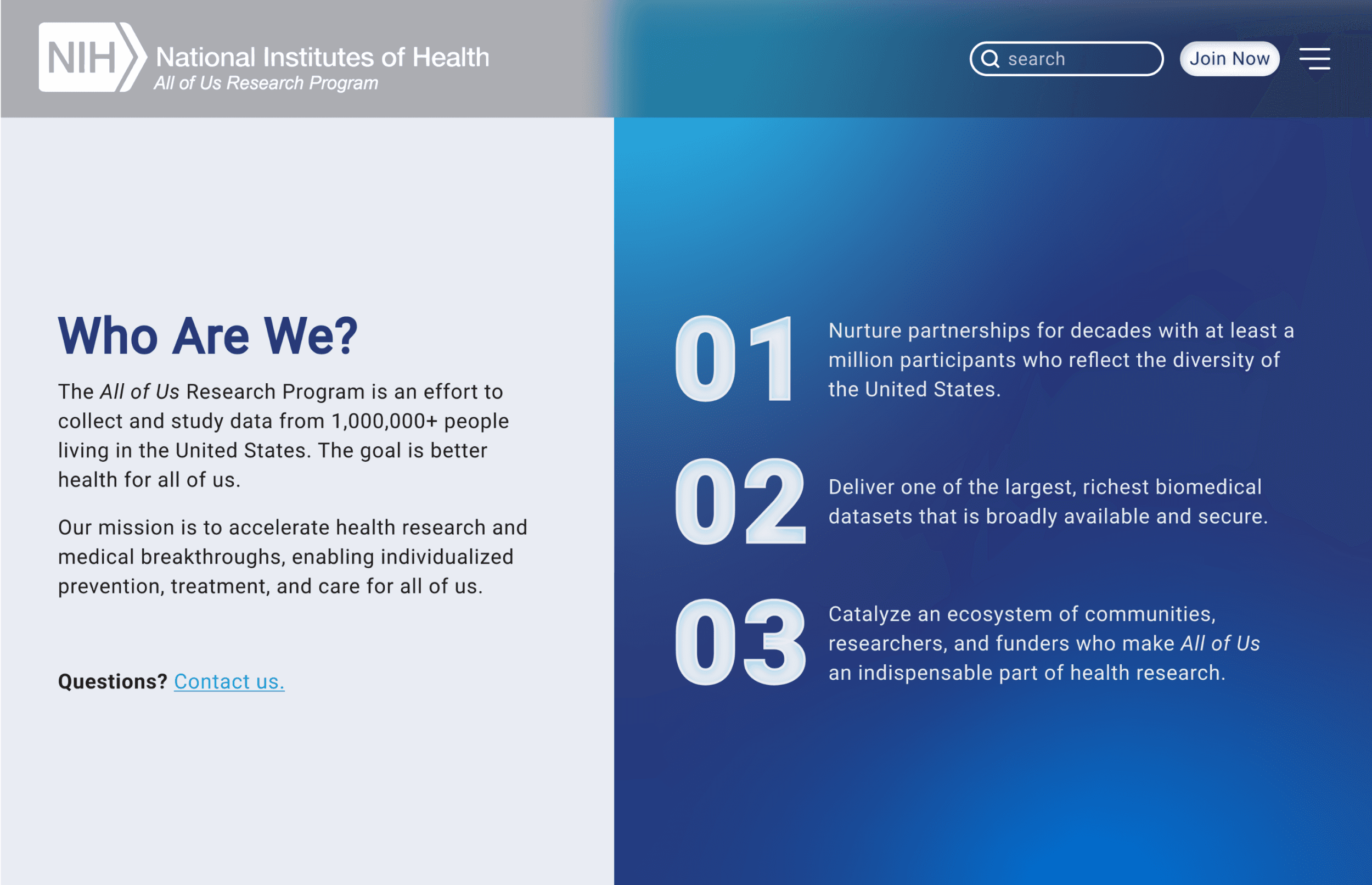
About the program
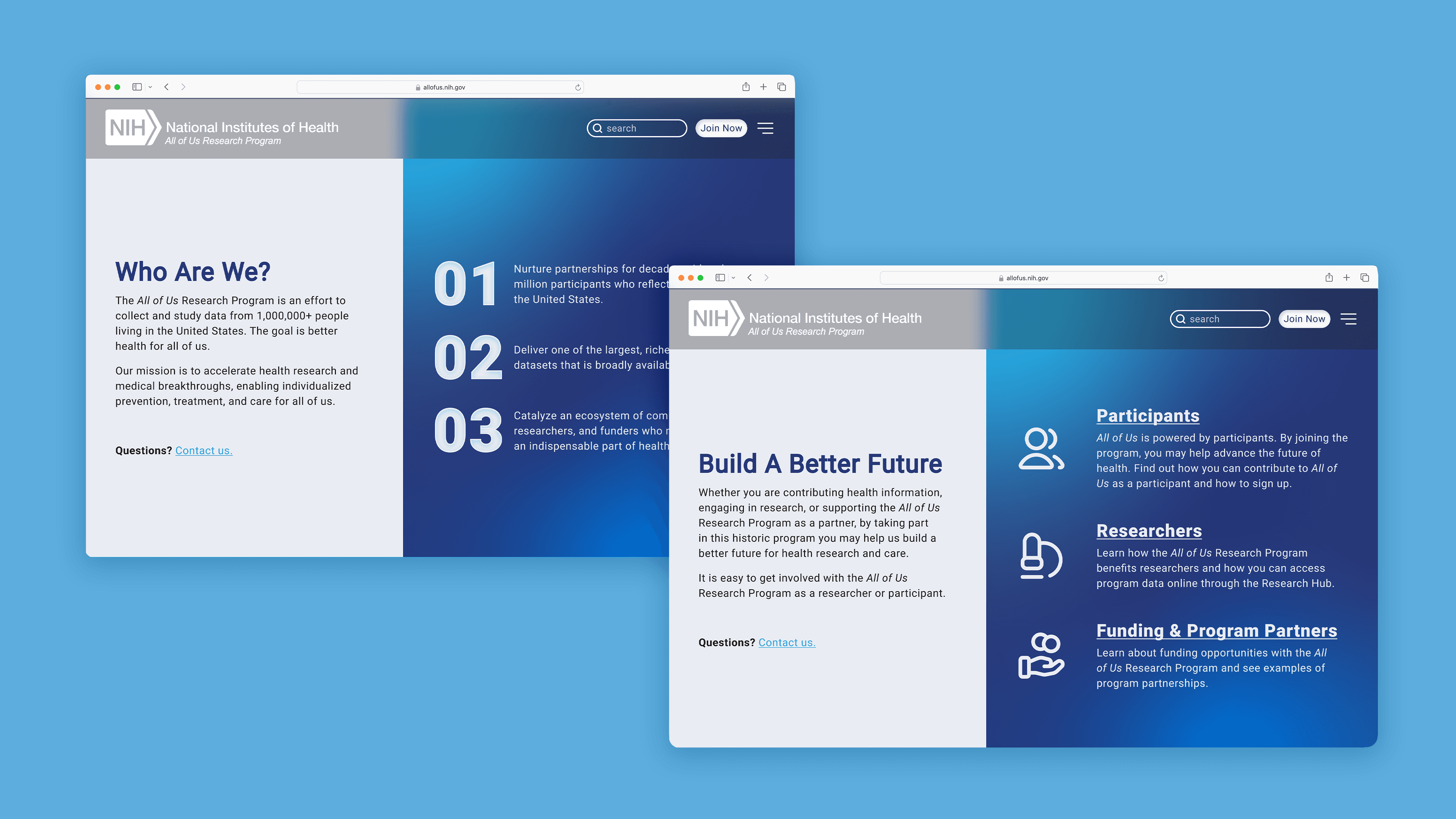
Although the homepage should explain most of the program, investors wanted to keep important navigation items, including a separate “About Us” page.
Even though the About Us page is content-heavy and lacks images, I kept the design simple and engaging by using a gradient background and iconography to add visual interest.
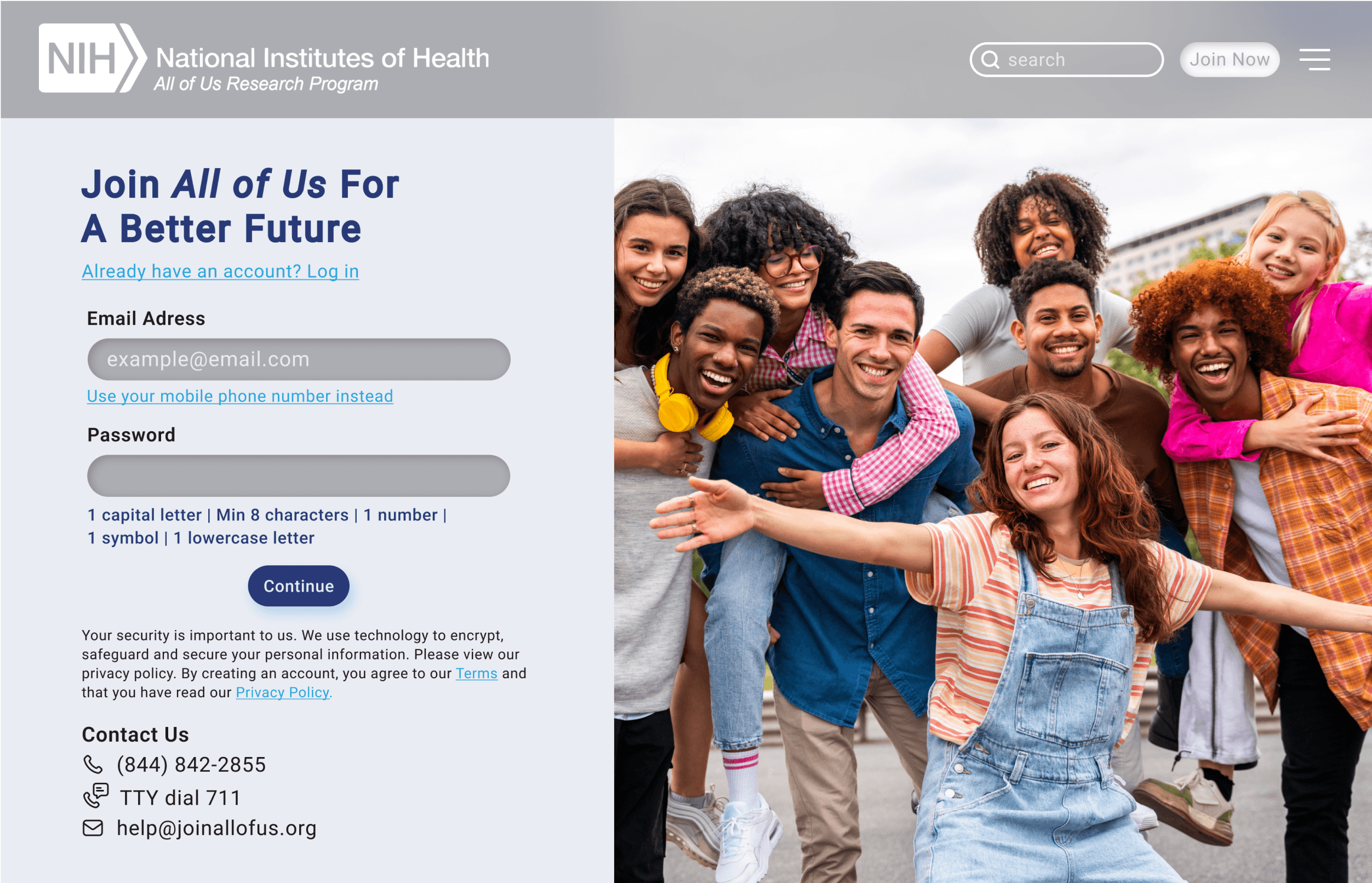
After the call to action, users are taken to the account creation page, which I designed to feel friendly and welcoming with vibrant imagery representing a diverse, younger audience—making the experience more inclusive and appealing.
Reflection
This project was my first time presenting a web design to senior stakeholders while targeting a younger audience. I learned how crucial prototypes are for demonstrating functionality and how small language adjustments can greatly enhance user engagement. Moving forward, I would focus on creating a more timeless UI by refining button and card styles and revisiting navigation to support a larger-scale project.
Although the design was never implemented, the stakeholders were very pleased and valued the more personable language and the shift from illustrations to authentic, real-world imagery.
anikashah021@gmail.com
© 2026 Anika Shah